
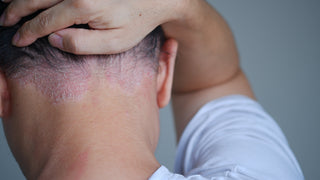
For many people with scalp psoriasis, the most frustrating symptom is not always the itching or redness, with it is the persistent build-up of thick scale.
Scales can collect around plaques, become visible in the hair, shed onto clothing and sometimes seem to return almost immediately after washing. Many people spend considerable time trying to remove flakes, only to find that the build-up reappears days later.
This can lead to understandable frustration. Some people begin picking at plaques to remove visible scale, while others become concerned that their treatment is no longer working because scales never seem to disappear completely.
Understanding why scales develop, why they can be difficult to remove and how scale management fits into wider scalp psoriasis treatment pathways can help set realistic expectations and reduce some of this uncertainty.
Importantly, scale removal is often one part of scalp psoriasis management. It may improve comfort and help other treatments work more effectively, but it does not treat the underlying condition itself.
Quick Answer
Scalp psoriasis scales develop because psoriasis causes skin cells to reproduce more rapidly than normal, leading to a build-up of scale on the skin surface.
Safe scale management usually focuses on softening and loosening built-up scale rather than forcibly removing it. This may involve medicated shampoos, including coal tar shampoos, alongside other treatment approaches recommended by healthcare professionals.
Removing scales may improve comfort, reduce visible flaking and help treatments reach affected skin more effectively. However, scale removal does not cure psoriasis or stop scales from returning permanently.
Why Do Psoriasis Scales Develop?
Scalp psoriasis is a chronic inflammatory skin condition that occurs when the immune system causes skin cells to reproduce more rapidly than normal. As new skin cells accumulate faster than they can be shed, layers of skin build up on the scalp surface.
This build-up creates the characteristic scale associated with psoriasis.
Common features include:
- Thick scale
- Silvery-white flakes
- Redness beneath the scale
- Itching
- Raised plaques
- Areas of soreness or irritation
Although scale is often the most visible symptom, it is a result of the underlying inflammatory process rather than a separate condition.
Why Can Scalp Scale Become So Thick?
The severity of scalp scaling varies considerably between individuals.
Some people experience relatively mild flaking, while others develop dense plaques covered by multiple layers of scale.

Factors that may contribute include:
- Ongoing inflammation
- Active flare-ups
- Repeated skin-cell build-up
- Delayed shedding of skin
- Scratching and irritation
- Interruptions to treatment routines
The scalp can also present unique challenges because hair may trap shed skin, making scale more noticeable and harder to remove than on other parts of the body.
Why Won't My Scalp Psoriasis Scales Come Off?
One of the most common frustrations is feeling as though scales simply will not budge.
Many people expect scales to wash away in the same way as ordinary flakes. When this does not happen, it can be tempting to scrub harder, scratch more frequently or switch treatments repeatedly.
However, psoriasis scale is often different from ordinary flaking.
Thick plaques may consist of multiple layers of accumulated skin that have developed over weeks or months. These layers can adhere closely to inflamed skin underneath, making them difficult to remove quickly.
Several factors can contribute:
- Thick plaque formation
- Ongoing inflammation beneath the scale
- Active flare-ups causing new scale to form
- Inconsistent treatment use
- Irritation caused by scratching or picking
Because scale can develop gradually, improvement often takes time as well.
This can be particularly frustrating when scales appear to return soon after washing. In many cases, this does not mean treatment has failed. Instead, it may reflect the ongoing nature of scalp psoriasis and the fact that new scales can continue to form while inflammation remains active.
Understanding this can help people approach management more realistically and avoid damaging attempts to remove scale too aggressively.
Why Does Scale Removal Matter?
Scale removal is often discussed because thick plaques can affect both comfort and treatment.
Potential Benefits of Managing Scale
|
Why It Matters |
Potential Impact |
|
Improves comfort |
Thick build-up may feel tight, itchy or uncomfortable |
|
Reduces visible flaking |
May help minimise flakes on clothing and around the hairline |
|
Supports scalp care |
Can make washing and scalp care easier |
|
Helps treatment access |
Thick scale may make it harder for treatments to reach affected skin |
|
Improves symptom monitoring |
Makes it easier to observe changes in plaques and inflammation |
For many people, reducing visible scale can also help address one of the most socially frustrating aspects of scalp psoriasis: flakes on dark clothing, around the hairline or on shoulders during daily activities.
How Do You Remove Psoriasis Scales from the Scalp Safely?
Focus on Softening Rather Than Forcing
A common misconception is that scales should simply be scraped off.
In practice, management usually focuses on helping scales soften and loosen gradually.

Approaches may include:
- Medicated shampoos
- Coal tar shampoos
- Other topical treatments recommended by healthcare professionals
- Consistent scalp-care routines
The aim is generally to encourage scales to separate naturally rather than forcefully removing them.
Be Patient With Thick Plaques
People often become discouraged when scales remain visible after several washes.
However, plaques that have developed over a prolonged period are unlikely to disappear immediately.
Improvement is often gradual, and realistic expectations can help reduce frustration when progress feels slow.
Why Picking Psoriasis Scales Is Discouraged
The temptation to pick plaques can be strong, particularly when scale feels thick, visible or uncomfortable.
Many people describe repeatedly checking affected areas throughout the day or feeling compelled to remove plaques before social situations.
However, picking or aggressively scratching psoriasis plaques is generally discouraged.
Potential consequences include:
- Increased irritation
- Greater soreness
- Bleeding
- Damage to the skin surface
- Increased discomfort
- Temporary hair shedding associated with inflammation or scratching
While removing plaques manually may provide temporary satisfaction, it does not address the processes causing new scale to form.
Common Scale Removal Mistakes to Avoid
|
Mistake |
Why It Can Be Problematic |
|
Picking plaques off manually |
May increase irritation, soreness and scalp damage |
|
Scratching aggressively |
Can worsen discomfort and contribute to temporary hair shedding |
|
Expecting overnight improvement |
Thick scale often requires ongoing management |
|
Constantly changing products |
Makes it difficult to understand what is helping |
|
Stopping treatment too soon |
Scale may return before meaningful improvement occurs |
|
Assuming scale removal treats psoriasis |
Scale management addresses symptoms rather than the underlying condition |
|
Using excessive force during washing |
May irritate already inflamed skin |
What Softens Scalp Psoriasis Scales?
Several treatment approaches may be used to help soften and loosen scale.
Treatment choice depends on symptom severity, individual circumstances and professional advice.
Coal Tar Shampoos and Scale Management
Coal tar has been used in dermatology for many decades and is commonly used to help manage scaling, flaking, itching, inflammation and excessive skin-cell turnover.
Coal tar shampoos are often used when significant scale build-up is present because they may help:
- Reduce scaling and flaking
- Soften built-up scale
- Loosen accumulated skin
- Help manage itching
- Support symptom control over time

Why Coal Tar Is Often Used Before Other Treatments
One reason scale management is frequently discussed in treatment pathways is that thick scale can create a physical barrier over affected skin.
When plaques become heavily coated with scale, topical treatments may be more difficult to apply effectively.
By helping soften and loosen scale, coal tar shampoos may support broader treatment strategies and help improve access to affected areas of the scalp.
For this reason, scale management is often considered an important early step within scalp psoriasis treatment pathways.
Where Does Polytar Fit?
Polytar is a licensed medicated scalp shampoo containing coal tar solution 4% w/w and is licensed in the UK for scalp psoriasis and several other inflammatory scalp conditions.
Like other coal tar shampoos, it should be viewed as one recognised management option within a broader treatment approach rather than as a standalone solution.
What Happens After Scale Removal?
Removing scale is often only one stage of management.
Once excess build-up has been reduced, healthcare professionals may recommend additional approaches aimed at managing inflammation and other symptoms.
Treatment pathways commonly focus on:
- Reducing scale build-up
- Improving access to affected skin
- Managing inflammation
- Reducing itching and discomfort
- Supporting long-term symptom control
The exact pathway varies between individuals and symptom severity.
Why Do Psoriasis Scales Keep Coming Back?
Many people feel discouraged when scales return after they have finally managed to reduce them.
This experience is common and reflects the nature of psoriasis itself.
Scalp psoriasis is generally characterised by cycles of flare-ups and remission. During flare-ups, accelerated skin-cell turnover can lead to new scale formation.
As a result:
- Scales may return after washing
- Plaques may reappear after periods of improvement
- Symptoms may fluctuate despite treatment
- Progress may not always feel linear
A return of scale does not automatically mean treatment has stopped working. In many cases, it reflects the recurring nature of the condition.
Long-Term Scale Management
Long-term management usually focuses on consistency rather than quick fixes.
For many people, the greatest challenge is maintaining routines when improvement feels slow or symptoms fluctuate unexpectedly.
Helpful principles may include:
- Following treatment plans consistently
- Avoiding aggressive scratching
- Managing flare-ups appropriately
- Monitoring symptom patterns
- Using recognised treatment approaches where appropriate
- Seeking professional advice when symptoms change significantly
Understanding that scalp psoriasis often involves periods of improvement and worsening can help set realistic expectations for long-term management.
Myth vs Fact
|
Myth |
Fact |
|
Removing scales cures psoriasis. |
Scale removal addresses visible build-up but does not cure the underlying condition. |
|
Picking plaques off is the best way to remove scale. |
Picking may increase irritation, soreness and discomfort. |
|
Thick scale means treatment has failed. |
Scale can persist during active disease and may take time to improve. |
|
Once scales are removed, they should never return. |
Psoriasis commonly follows cycles of flare-ups and remission. |
|
If scales return after washing, nothing is working. |
Returning scale often reflects the ongoing nature of psoriasis rather than treatment failure. |
Frequently Asked Questions
How do I remove psoriasis scales from my scalp?
Management typically focuses on softening and loosening scales rather than forcibly removing them. Medicated shampoos and other treatments may be used as part of a wider scalp psoriasis management plan.
Should I pick psoriasis scales off?
Picking or aggressively scratching plaques is generally discouraged because it may increase irritation, soreness and scalp discomfort.
Why do my scales keep coming back?
Scalp psoriasis is a chronic inflammatory condition that commonly follows cycles of flare-ups and remission. New scale can develop when symptoms become more active.
Why won't my scalp psoriasis scales come off?
Thick plaques often consist of multiple layers of accumulated skin that may have developed over weeks or months. These can be difficult to remove quickly and often require gradual management.
What softens scalp psoriasis scales?
Several treatment approaches may help soften built-up scale. Coal tar shampoos are commonly used to help manage scaling and may help loosen scale over time.
Do coal tar shampoos help remove scale?
Coal tar shampoos are commonly used to help manage scaling, flaking and itching associated with scalp psoriasis and may help soften built-up scale.
Does removing scale cure psoriasis?
No. Removing scale may improve comfort and appearance, but it does not address the underlying inflammatory condition that causes psoriasis.
Can removing scale damage my scalp?
Aggressive scratching or picking may irritate the scalp and increase discomfort. Safe management generally focuses on softening and loosening scale rather than forcibly removing it.
Key Takeaways
- Scalp psoriasis causes accelerated skin-cell turnover, leading to thick scale formation.
- Thick scale can be difficult to remove because plaques often develop gradually over time.
- Scale removal is often an important step within broader scalp psoriasis treatment pathways.
- Softening and loosening scale is generally preferred over picking or aggressively scratching plaques.
- Coal tar shampoos may help soften built-up scale and support wider scalp psoriasis management strategies.
- Reducing scale may help other treatments reach affected skin more effectively.
- Scales returning after washing does not necessarily mean treatment has failed.
- Removing scale does not cure psoriasis, and ongoing management is often required.
- Long-term symptom control usually focuses on consistency, realistic expectations and sustainable treatment routines.