
Quick Answer
Scalp psoriasis and dandruff can both cause visible flakes, itching and scaling, making them easy to confuse. However, they are different conditions with different underlying causes and recognised treatment pathways.
Scalp psoriasis is a chronic inflammatory skin condition in which the immune system causes skin cells to reproduce more rapidly than normal, leading to a build-up of thick scale. Dandruff is generally considered a milder form of seborrhoeic dermatitis and is commonly associated with an inflammatory response involving a naturally occurring skin yeast called Malassezia.
Although certain symptoms overlap, healthcare professionals assess the overall pattern of symptoms, their appearance and their distribution rather than relying on any single sign. Understanding these differences can help explain why obtaining the correct diagnosis is important.
Introduction
Few scalp conditions create as much confusion as scalp psoriasis and dandruff.
Many people first notice flakes on their shoulders, persistent itching or irritation that seems to return no matter which shampoo they try. Because dandruff is so common, it is often the first explanation people consider.

When symptoms continue, become more severe or repeatedly return, it can be difficult to understand why.
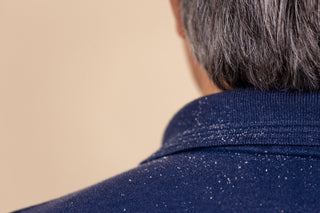
The confusion is understandable. Both conditions can cause visible flaking, itching and scaling, and neither can be identified simply by looking at flakes alone.
In reality, scalp psoriasis and dandruff develop for different biological reasons. While they may appear similar at first, they often differ in the appearance of the scale, the type of inflammation involved and the recognised treatment approaches used to manage them.
Rather than helping you diagnose yourself, this guide explains why the two conditions overlap, what healthcare professionals look for when assessing symptoms and why identifying the underlying condition is an important step towards appropriate long-term management.
Scalp Psoriasis vs Dandruff at a Glance
|
Feature |
Scalp Psoriasis |
Dandruff |
|
Underlying cause |
Chronic immune-mediated inflammatory condition |
Often considered a mild form of seborrhoeic dermatitis associated with an inflammatory response involving Malassezia |
|
Scale |
Often thick, dry and silvery-white |
Usually finer, white or yellow and may appear greasy |
|
Inflammation |
Often more noticeable |
Usually mild |
|
Redness |
Common beneath plaques |
Usually limited |
|
Appearance |
Well-defined plaques with built-up scale |
Diffuse flaking without clearly defined plaques |
|
Hairline involvement |
May extend beyond the hairline |
Usually confined to the scalp |
|
Long-term pattern |
Flare-ups and periods of improvement |
May fluctuate but often responds to recognised dandruff treatments |
|
Diagnosis |
Based on overall clinical assessment |
Based on clinical assessment and exclusion of other causes |
Although these differences are commonly recognised, no single feature confirms either condition on its own.
Why Are Scalp Psoriasis and Dandruff So Often Confused?
The main reason is simple: both conditions commonly produce visible flakes.
When flakes appear unexpectedly, many people naturally assume they have dandruff. However, flakes are not a diagnosis. They are a symptom that can occur in several scalp conditions, including scalp psoriasis, seborrhoeic dermatitis, eczema affecting the scalp and sebopsoriasis.
Itching adds to the confusion. Both conditions can itch, and the severity varies considerably from person to person. Redness may also be present in both, although it is often more pronounced in scalp psoriasis.

Because these symptoms overlap, it is often impossible to identify the underlying condition from flakes alone. This is why healthcare professionals consider the complete pattern of symptoms rather than relying on one visible sign.
Understanding the Different Underlying Causes
Although scalp psoriasis and dandruff can appear similar, the biological processes behind them are different.
What Causes Scalp Psoriasis?
Scalp psoriasis is a chronic inflammatory skin condition.
It develops when immune-system activity causes skin cells to reproduce more rapidly than normal. Instead of shedding at the usual rate, skin cells build up on the scalp surface, creating the thick scale that characterises the condition.
Common symptoms include:
- Thick scale
- Itching
- Redness
- Soreness
- Well-defined plaques
- Scale extending beyond the hairline
- Temporary hair shedding associated with inflammation or scratching
Symptoms usually follow a pattern of flare-ups and periods of improvement rather than disappearing permanently.
What Causes Dandruff?
Dandruff is characterised by visible flaking of the scalp and is often considered a milder form of seborrhoeic dermatitis.
Unlike psoriasis, dandruff is commonly associated with an inflammatory response involving Malassezia, a naturally occurring yeast that lives on healthy skin.
Although Malassezia is normally harmless, some people appear to develop an inflammatory response to it, leading to increased flaking and mild irritation.
Typical symptoms include:
- White or yellow flakes
- Mild itching
- Minimal redness
- Limited inflammation
Understanding these different biological mechanisms helps explain why treatments for dandruff and scalp psoriasis are not always interchangeable.
How Do the Symptoms Differ?
Although symptoms overlap considerably, healthcare professionals look for patterns rather than relying on individual symptoms.
Scale
One of the most noticeable differences is the appearance of the scale.

Scalp psoriasis commonly produces thicker layers of scale that may appear silvery-white and remain firmly attached to the scalp. Dandruff usually produces smaller, finer flakes that may appear white or yellow and can sometimes feel greasier.
However, scale appearance varies between individuals and should not be used to diagnose either condition.
Redness and Inflammation
Inflammation is generally more pronounced in scalp psoriasis.

People with psoriasis often develop clearly inflamed plaques beneath the scale, whereas dandruff usually involves relatively mild inflammation.
The amount of redness varies considerably, so healthcare professionals consider this alongside other features rather than in isolation.
Itching
Itching is common in both conditions.
Some people experience only occasional mild itching, while others find it persistent or particularly troublesome during flare-ups.
Because itching is such a common feature of many scalp disorders, it cannot reliably distinguish one condition from another.
Distribution
The location of symptoms can also provide useful information.
Scalp psoriasis may affect:
- The scalp
- Around the hairline
- Behind the ears
- The back of the neck
Plaques may extend beyond the scalp itself.
Dandruff generally remains confined to the scalp and is less likely to produce well-defined plaques extending beyond the hairline.
A More Detailed Comparison
|
Feature |
Scalp Psoriasis |
Dandruff |
|
Underlying process |
Immune-mediated inflammation with accelerated skin-cell turnover |
Inflammatory response associated with Malassezia yeast |
|
Scale |
Thick, often silvery-white and firmly attached |
Fine white or yellow flakes that may appear greasy |
|
Plaques |
Common |
Not typical |
|
Redness |
Often noticeable |
Usually mild |
|
Hairline involvement |
May extend beyond the hairline |
Usually confined to the scalp |
|
Severity |
Mild to severe |
Usually mild |
|
Pattern |
Chronic with flare-ups and remission |
May fluctuate over time |
|
Typical management |
Medicated shampoos, topical treatments and, where appropriate, prescription therapies |
Anti-dandruff shampoos, antifungal shampoos and other recognised treatments depending on symptoms |
The purpose of this comparison is to improve understanding rather than help readers diagnose themselves.
Why Self-Diagnosis Can Be Difficult
One of the biggest misconceptions is that a single symptom can identify a scalp condition.
In reality, healthcare professionals rarely diagnose scalp psoriasis or dandruff based on flakes alone.
Instead, they assess a combination of factors, including:
- The appearance of the scale
- The degree of inflammation
- The pattern and location of symptoms
- Whether plaques are present
- How symptoms have changed over time
- Whether other areas of the body are affected
- Previous treatments and how symptoms have responded
One reason self-diagnosis can be difficult is that many scalp conditions share the same visible symptoms. Online symptom checklists and comparison photographs can be helpful for understanding general differences, but they cannot reliably distinguish between conditions.
The appearance of the scalp can also change over time. Symptoms may vary during flare-ups and periods of improvement, while previous treatments can alter the amount of scale, redness or inflammation that is visible. As a result, the same condition may look different from one week to the next or from one person to another.
Rather than relying on any single feature, healthcare professionals consider the overall clinical picture. They assess how symptoms developed, where they occur, whether plaques are present, how the condition has responded to previous treatments and whether similar symptoms affect other parts of the body.
Adding to the complexity, some people develop sebopsoriasis, an overlap condition that combines features of psoriasis and seborrhoeic dermatitis. In these situations, symptoms may not fit neatly into one category, making professional assessment particularly valuable.
This is why repeated changes of shampoo or attempts to identify a condition from online photographs can sometimes delay appropriate assessment.
Where Do Treatment Pathways Differ?
Because scalp psoriasis and dandruff develop for different reasons, treatment focuses on the underlying condition rather than simply removing visible flakes.
This means that two people with apparently similar symptoms may receive different treatment recommendations. Although both may experience itching and visible flaking, healthcare professionals choose treatments according to the biological processes driving the condition rather than the flakes themselves. Understanding the underlying cause helps explain why treatments that are appropriate for one scalp condition are not necessarily intended for another.
Many people understandably become frustrated when symptoms persist despite trying several shampoos. In some cases, this happens because the treatment being used is designed for a different scalp condition.
Managing Dandruff
Management of dandruff commonly focuses on reducing visible flaking while addressing the inflammatory response associated with Malassezia yeast.
Depending on an individual's symptoms, recognised treatment approaches may include:
- Anti-fungal shampoos containing ingredients such as ketoconazole
- Other medicated anti-dandruff shampoos
- Ongoing scalp-care routines
Treatment varies according to symptom severity, previous response to treatment and individual circumstances.
Managing Scalp Psoriasis
Scalp psoriasis management usually focuses on controlling inflammation, managing scale and reducing the impact of recurring symptoms over time.
Treatment may involve:
- Medicated shampoos
- Coal tar shampoos
- Topical prescription treatments
- Scale-management approaches
- Phototherapy in some cases
- Other prescription therapies where appropriate
Because scalp psoriasis is a chronic inflammatory condition, treatment generally aims for long-term symptom control rather than permanent cure.
Where Do Coal Tar Shampoos Fit?

Coal tar has been used in dermatology for many decades and is commonly used to help manage:
- Scaling
- Flaking
- Itching
- Inflammation
- Excessive skin-cell turnover
Understanding why different medicated shampoos are used can help explain why treatment recommendations vary.
Ingredients such as ketoconazole are commonly used where Malassezia yeast is thought to contribute to symptoms, making them recognised treatment options for dandruff and seborrhoeic dermatitis. Coal tar has a different role. It is commonly used to help manage scaling, itching, inflammation and excessive skin-cell turnover associated with inflammatory scalp conditions, including scalp psoriasis, while also being recognised as a treatment option for dandruff.
Because these ingredients work in different ways, healthcare professionals may recommend different medicated shampoos depending on the underlying condition rather than the appearance of the flakes alone.
Polytar is one example of a licensed medicated coal tar shampoo used in the UK for scalp psoriasis, dandruff and several other inflammatory scalp conditions. Like other coal tar shampoos, it should be viewed as one recognised treatment option within broader scalp management rather than as a standalone solution or the only appropriate treatment.
Why the Correct Diagnosis Matters
Many people understandably focus on the flakes they can see.
Healthcare professionals, however, focus on the condition causing those flakes.
Although reducing visible scale may improve comfort and confidence, successful long-term management depends on understanding why the flakes developed in the first place.
For example:
- A shampoo designed primarily to reduce Malassezia-related flaking is not considered a primary treatment for psoriasis itself.
- Someone with scalp psoriasis may require treatment aimed at controlling inflammation as well as managing scale.
- Someone with persistent dandruff may benefit from treatments that target the inflammatory response associated with Malassezia.
This is why obtaining an accurate diagnosis is often more valuable than repeatedly changing products in the hope that one will eventually work.
When Should You Seek Professional Assessment?
Many episodes of mild scalp flaking improve with appropriate over-the-counter treatments.
However, professional assessment may be appropriate if:
- Symptoms persist despite treatment
- Thick plaques develop
- Redness or soreness becomes more noticeable
- Symptoms extend beyond the hairline
- The diagnosis remains uncertain
- Symptoms significantly affect day-to-day life
- You develop widespread psoriasis symptoms elsewhere on the body
Healthcare professionals can consider your medical history, examine the pattern of symptoms and recommend management options that are appropriate for the underlying condition.
Myth vs Fact
|
Myth |
Fact |
|
All scalp flakes are dandruff. |
Flaking can occur in several scalp conditions, including scalp psoriasis, seborrhoeic dermatitis, eczema affecting the scalp and sebopsoriasis. |
|
Thick flakes always mean psoriasis. |
Scale thickness alone cannot diagnose a scalp condition. Healthcare professionals assess the overall pattern of symptoms. |
|
If an anti-dandruff shampoo doesn't work, it must be psoriasis. |
Persistent symptoms can have several possible explanations and should not be self-diagnosed. |
|
Psoriasis and dandruff are the same condition. |
They are different conditions with different underlying biological mechanisms and recognised treatment pathways. |
|
Treating the flakes treats the underlying condition. |
Management is directed at the condition causing the flakes rather than the flakes themselves. |
Frequently Asked Questions
Can scalp psoriasis look exactly like dandruff?
Sometimes the two conditions can appear very similar, particularly in their early stages or when symptoms are mild. This is one reason healthcare professionals assess several features together rather than relying on a single symptom.
Can dandruff turn into scalp psoriasis?
No. Dandruff and scalp psoriasis are different conditions with different underlying biological mechanisms, so dandruff does not develop into psoriasis.
However, symptoms can overlap, and it is possible for someone to develop a different scalp condition over time. Persistent symptoms, changes in the appearance of the scalp or treatments that are no longer helping may warrant professional assessment to ensure the underlying condition has been correctly identified.
Is dandruff a form of psoriasis?
No. Dandruff is generally considered a milder form of seborrhoeic dermatitis and is commonly associated with an inflammatory response involving Malassezia yeast. Psoriasis is a chronic inflammatory condition driven by immune-system activity.
Can you have both conditions at the same time?
Yes. Some people may experience overlapping scalp conditions, and an overlap condition known as sebopsoriasis combines features of psoriasis and seborrhoeic dermatitis. This can make diagnosis more challenging.
Why do both conditions cause flakes?
Although both conditions produce visible scale, they do so for different biological reasons. In scalp psoriasis, accelerated skin-cell turnover leads to a build-up of scale. In dandruff, flaking is associated with an inflammatory response involving Malassezia.
Are coal tar shampoos used for both conditions?
Yes. Coal tar shampoos are recognised treatment options for both scalp psoriasis and dandruff. Their role depends on the underlying condition, symptom severity and the wider treatment plan recommended by a healthcare professional.
Can I diagnose myself using online comparison charts?
Comparison guides can help improve understanding, but they cannot confirm a diagnosis. Similar symptoms occur in several scalp conditions, which is why healthcare professionals assess the overall clinical picture rather than relying on one characteristic.
Key Takeaways
- Scalp psoriasis and dandruff commonly cause flaking and itching, making them easy to confuse.
- Despite similar symptoms, they develop through different biological processes.
- Healthcare professionals diagnose these conditions by assessing the complete pattern of symptoms rather than one sign alone.
- Treatment follows the underlying diagnosis rather than the appearance of visible flakes.
- Coal tar shampoos are recognised treatment options for both conditions, while other treatments may differ according to the diagnosis.
- Persistent, worsening or uncertain symptoms should be assessed by a healthcare professional rather than self-diagnosed.