Quick Answer
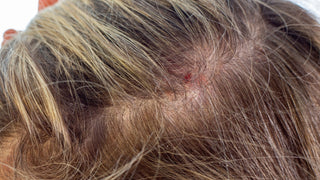
A scalp can start bleeding when the skin surface becomes damaged. This may happen after repeated scratching, picking at scales or scabs, or irritation of skin that is already inflamed.
Scalp conditions associated with itching and inflammation, including scalp psoriasis and seborrhoeic dermatitis, can make scratching more likely. However, bleeding itself does not tell you which condition is responsible, and it should not automatically be attributed to scratching.
A useful question is: what happened before the bleeding started? Bleeding that follows scratching of an itchy, flaky or inflamed area is different from unexplained bleeding or bleeding following a head injury.
Recurrent, persistent or significant bleeding, worsening pain, significant skin damage or possible signs of infection should be professionally assessed. Bleeding following a head injury may require more urgent medical attention, particularly if it does not stop or is accompanied by neurological symptoms.
Introduction
Finding blood on your scalp can be alarming, particularly when you cannot immediately see where it is coming from.

You might notice blood beneath your fingernails after scratching. Perhaps a patch of scale has come away and exposed sore skin underneath. You may find small scabs when parting your hair, or notice the same area bleeding repeatedly after washing, brushing or picking at it.
The blood is noticeable, but it may not be the beginning of the problem.
For some people, the sequence starts earlier: the scalp becomes itchy, irritated or inflamed, scratching follows, and repeated damage eventually breaks the skin. In other situations, bleeding may appear without an obvious history of itching or may follow an injury.
This is why one of the most useful questions to ask is:
"What was happening to my scalp before it started bleeding?"
Understanding that sequence can help distinguish damaged, irritated skin from bleeding that needs separate assessment.
Why Can an Itchy Scalp Start Bleeding?
Itching creates an urge to scratch. If scratching becomes repeated or forceful, it can irritate and damage the skin surface.
A scalp that is already inflamed, irritated, cracked or covered with scale may be particularly vulnerable. This can extend the familiar itch-scratch cycle into an itch-scratch-bleed cycle:
Underlying irritation or inflammation - itching - scratching or picking - skin damage - soreness or bleeding - further irritation
This does not explain every bleeding scalp. However, it helps explain why the blood may sometimes be the result of an earlier scalp problem rather than the original problem itself.
Simply telling someone not to scratch may also be unrealistic when persistent itching is being driven by an underlying scalp condition. Reducing further damage and understanding what is causing the itch are therefore both important.
Can Picking Scales or Scabs Cause Bleeding?
Picking can damage the skin underneath a scale or scab.

This is particularly relevant with scalp psoriasis, where thick areas of scale can become frustrating or uncomfortable. It can be tempting to scratch, peel or pick at visible build-up, especially when flakes become trapped in the hair.
However, forcibly removing scale is different from managing it gently. Repeated picking or aggressive scale removal can increase irritation and may damage the affected skin.
A similar problem can occur with scabs. Repeatedly picking the same area can disturb damaged skin again and contribute to further bleeding or scabbing.
If the same areas continually scab and bleed, professional assessment can help establish why the skin is repeatedly becoming damaged.
Can Scalp Psoriasis Cause Bleeding?
Scalp psoriasis can create circumstances in which bleeding occurs, but a bleeding scalp does not mean you have psoriasis.
Scalp psoriasis is a chronic inflammatory skin condition in which immune-system activity causes skin cells to reproduce more rapidly than normal. This produces a build-up of scale and can cause symptoms including:
- thick scale
- itching
- redness
- soreness
- clearly defined plaques
- temporary hair shedding associated with inflammation or scratching
During an active flare-up, itching and irritation may encourage scratching or picking. Affected skin may also become dry or cracked. If the skin becomes damaged, bleeding can occur.
The distinction is important: bleeding does not diagnose psoriasis. Other scalp conditions and physical damage can also result in broken skin.
If you have persistent thick scale, plaques, itching or other scalp symptoms, professional assessment can help determine what is causing them rather than relying on bleeding alone.
Can Dandruff Make Your Scalp Bleed?
Bleeding is not a defining feature of dandruff.
Dandruff is characterised mainly by visible white or yellow flakes, usually with mild itching and minimal inflammation. However, people sometimes use the word “dandruff” to describe almost any scalp flaking.

If what appears to be dandruff is accompanied by considerable soreness, inflammation, persistent itching or damaged and bleeding skin, the wider pattern deserves closer consideration. Another scalp problem or repeated scratching may be contributing.
Blood itself does not identify the cause. It is therefore more useful to consider the combination and progression of symptoms than to judge the problem by the flakes alone.
What About Seborrhoeic Dermatitis?
Seborrhoeic dermatitis is an inflammatory skin condition that can cause scalp itching, irritation and scale.
Repeated scratching may damage already irritated skin. However, bleeding does not diagnose seborrhoeic dermatitis, just as it does not diagnose psoriasis or dandruff.
If the underlying cause of persistent scalp symptoms is uncertain, professional assessment may be helpful.
Other Reasons a Scalp May Become Damaged or Bleed
Not every bleeding scalp follows the itch-scratch pattern.
Irritation or contact reactions, sores or scabs, infection, physical injury and other inflammatory scalp problems may also need consideration depending on the circumstances.
Rather than trying to diagnose the problem from one symptom, look at the overall pattern:
|
What you notice |
What it may tell you |
|
Itching came first and bleeding follows scratching |
Repeated scratching may be damaging already irritated skin |
|
Thick scale or plaques are repeatedly picked |
Mechanical damage may be contributing to bleeding |
|
Flaking occurs with significant inflammation or soreness |
The symptoms may warrant assessment rather than assuming dandruff alone is responsible |
|
The same areas repeatedly scab and bleed |
The reason for recurrent skin damage needs consideration |
|
Bleeding occurs without an obvious explanation |
Professional assessment is appropriate |
|
Bleeding started after a head injury |
This should be considered separately from bleeding associated with an ongoing scalp condition |
These patterns cannot provide a diagnosis, but they can help clarify what information may be useful when discussing symptoms with a healthcare professional.
Why Can a Scalp Wound Seem to Bleed So Much?
The scalp has a substantial blood supply, so even relatively small wounds can sometimes produce noticeable bleeding.
This can make a scalp injury appear particularly dramatic. However, significant bleeding should not be assumed to be harmless simply because scalp wounds can bleed noticeably.
Bleeding following a head injury should be considered separately from bleeding associated with an itchy or inflamed scalp. If injury-related bleeding does not stop or is accompanied by neurological symptoms, prompt medical attention is appropriate.
How Can You Reduce Further Scalp Damage?
If scratching or picking is repeatedly damaging your scalp, the aim is to avoid adding further irritation while the underlying cause is considered.
Where possible:
- avoid repeatedly scratching or picking the affected area
- avoid forcibly removing scales or scabs
- avoid aggressive scale-removal techniques
- avoid introducing multiple new products while the cause is uncertain
- seek professional advice if bleeding or skin damage persists, recurs or concerns you
If itching repeatedly leads to scratching, the underlying itching or inflammation also needs consideration. This is how the itch-scratch-bleed cycle can be addressed without treating the bleeding itself as the diagnosis.
Treating the Underlying Cause
There is no single treatment for a “bleeding scalp” because bleeding is a symptom rather than a condition in itself.
Treatment depends on why the skin became damaged. Scalp psoriasis, seborrhoeic dermatitis, dandruff, eczema, irritation, infection and physical injury have different management pathways.
The presence of blood does not itself mean that a medicated shampoo or any other particular treatment is appropriate.
Where bleeding occurs alongside an inflammatory or scaling scalp condition, management needs to focus on the underlying condition as well as avoiding further skin damage.
Where Does Polytar Fit?
Polytar is not a treatment for scalp bleeding.
Polytar is a licensed medicated scalp shampoo containing Coal Tar Solution 4% w/w. It is licensed in the UK for the treatment and management of scalp conditions including scalp psoriasis, seborrhoeic dermatitis, eczema affecting the scalp and dandruff, including associated itching, scaling and flaking.
Its relevance therefore depends on the underlying scalp condition, not on the presence of bleeding.
Polytar should not be understood as a treatment for bleeding, as something that heals broken skin or as something that prevents bleeding. If the cause of scalp bleeding is uncertain, appropriate professional advice should be sought.
When Should You Seek Medical Advice?
Professional assessment should be considered when scalp bleeding or the surrounding symptoms are persistent, recurrent, unexplained or becoming more significant.
Consider speaking to a pharmacist, GP or other healthcare professional if:
- bleeding is unexplained
- the same areas repeatedly bleed
- bleeding or skin damage persists
- the scalp becomes increasingly painful or sore
- there is significant or worsening skin damage
- the area becomes swollen, develops discharge or appears infected
- the scalp is weeping or heavily crusted
- hair loss becomes concerning
- you are unsure what underlying condition is causing the problem
Bleeding following a head injury is a separate situation from chronic scalp itching or inflammation. The approved research supports prompt medical attention where injury-related bleeding does not stop or is accompanied by neurological symptoms.
Myth vs Fact
|
Myth |
Fact |
|
A bleeding scalp means I have psoriasis. |
No. Psoriasis may create itching and inflammation that contribute to skin damage, but bleeding can occur for several reasons and does not diagnose psoriasis. |
|
If my scalp bleeds after scratching, the bleeding is the condition. |
Bleeding may result from scratching skin that was already irritated or inflamed. The reason for the underlying symptoms may also need consideration. |
|
Picking psoriasis scales is the quickest way to clear them. |
Aggressive picking can increase irritation and damage the skin. Gentle scale management is different from forcibly picking plaques. |
|
Bleeding means my dandruff has become severe. |
Bleeding is not a defining measure of dandruff severity. Scratching, irritation or another underlying scalp problem may need consideration. |
|
A medicated shampoo treats a bleeding scalp. |
Medicated shampoos have specific recognised uses. Bleeding itself is not a diagnosis or a reason to assume that a medicated shampoo is appropriate. |
Frequently Asked Questions
Why does my scalp bleed when I scratch it?
Repeated or forceful scratching can damage the skin surface. If your scalp is already irritated, inflamed or covered with scale, it may be more vulnerable to damage. Bleeding does not reveal what caused the original itching.
Why is there blood under my fingernails after scratching my scalp?
Blood under your fingernails after scratching may mean that scratching has broken the skin. This can happen more easily when the scalp is already irritated or inflamed. It does not identify the underlying cause of the scalp symptoms.
Can scalp psoriasis cause bleeding?
Scalp psoriasis can cause itching, inflammation, soreness and thick scale. Scratching, picking, cracking or other damage to affected skin may result in bleeding. However, bleeding alone does not mean you have psoriasis.
Can dandruff make your scalp bleed?
Bleeding is not a defining feature of dandruff. If flaking occurs alongside significant soreness, inflammation, persistent itching or bleeding, scratching or another scalp problem may be contributing.
Why do I have scabs and blood on my scalp?
Scabs can form over damaged areas of skin, and scratching or picking may contribute to repeated damage and scabbing. However, different problems can damage scalp skin. Recurrent or unexplained bleeding and scabbing should be professionally assessed.
Can picking psoriasis scales cause bleeding?
Repeated or aggressive picking can damage affected skin beneath psoriasis scale and may contribute to soreness or bleeding. Gentle scale management is different from forcibly picking plaques.
Why does my scalp bleed so easily?
The scalp has a substantial blood supply, so relatively small wounds can sometimes produce noticeable bleeding. Persistent or significant bleeding should not be ignored.
Is a bleeding scalp serious?
It depends on the circumstances. Bleeding associated with scratching is different from recurrent or unexplained bleeding, significant skin damage or bleeding following a head injury. Persistent, recurrent, significant or concerning bleeding should be professionally assessed.
When should I see a doctor about a bleeding scalp?
Professional assessment is appropriate if bleeding is unexplained, recurrent or persistent; skin damage is significant or worsening; pain is increasing; there may be signs of infection; or you do not know what is causing the problem. Bleeding following a head injury belongs in a separate, potentially more urgent category.
Key Takeaways
- Scalp bleeding is a symptom, not a diagnosis.
- What happened before the bleeding can provide useful context.
- Itching followed by repeated scratching or picking can damage already irritated skin and lead to bleeding.
- Scalp psoriasis and seborrhoeic dermatitis can involve itching and inflammation, but bleeding does not confirm either condition.
- Bleeding is not a defining feature of dandruff.
- Treatment depends on identifying and managing the underlying cause rather than treating “bleeding scalp” as one condition.
- Medicated shampoos are not treatments for bleeding itself.
- Recurrent, unexplained, persistent or significant bleeding should be professionally assessed.
- Bleeding following a head injury should be considered separately from bleeding associated with an itchy or inflamed scalp.