
Quick Answer
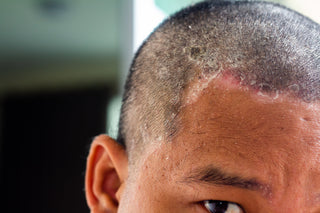
Plaque psoriasis is the most common form of psoriasis. It causes raised, clearly defined areas of inflamed skin known as plaques, which are typically covered with silvery-white scale. Plaques can develop on several parts of the body, including the scalp, where they may cause persistent scaling, itching, redness and discomfort.
Many people understand psoriasis as a condition that causes flaky skin, but the defining feature of plaque psoriasis is the development of plaques. Understanding what plaques are, why they form and how they behave over time can make it easier to recognise symptoms and understand how plaque psoriasis differs from other common scalp conditions.
What Is Plaque Psoriasis?
Plaque psoriasis is the most common form of psoriasis. It is characterised by raised, clearly defined areas of inflamed skin covered by scale.
These plaques can develop anywhere on the body but are commonly found on:
- The scalp
- Elbows
- Knees
- Lower back
- Buttocks
While many people associate psoriasis with flaking skin, plaques are actually the hallmark feature of plaque psoriasis. The condition is named after these characteristic patches of inflamed, thickened skin.
For people experiencing symptoms on the scalp, understanding plaques is often more useful than simply understanding psoriasis itself. Plaques help explain why symptoms such as thick scaling, persistent flaking and visible patches of affected skin occur.
What Does the Term "Plaque" Mean?
The term plaque is often unfamiliar outside medical settings, which is one reason many people find the name plaque psoriasis confusing.
In simple terms, a plaque is a raised, clearly defined area of inflamed skin.
Unlike general dryness or loose flakes, a psoriasis plaque is an actual patch of skin that has become thicker and more inflamed than the surrounding area.
Psoriasis plaques are often:
- Raised above the surrounding skin
- Clearly outlined
- Covered with scale
- Rough to the touch
- Red or inflamed underneath the scale
- Variable in size, from small patches to larger affected areas
A useful way to think about a plaque is as an area where multiple layers of excess skin cells have accumulated on top of inflamed skin.
On the scalp, plaques may be hidden beneath the hair at first. Some people only realise something is wrong when they notice persistent flaking, itching or patches that feel thicker than the surrounding scalp.
Because plaques are a defining feature of psoriasis, recognising them can help distinguish psoriasis from conditions such as dandruff, where flaking occurs without the formation of well-defined plaques.
Why Do Psoriasis Plaques Form?
Plaques develop because psoriasis affects the normal process of skin renewal.
Healthy skin is constantly replacing itself. New skin cells are produced, move towards the surface and are eventually shed.
In psoriasis, this process becomes accelerated.
The immune system drives inflammation within the skin, causing skin cells to reproduce more rapidly than normal. As a result, skin cells accumulate faster than they can be shed.
This creates several visible changes:
- Skin cells build up on the surface
- Scale begins to form
- The affected area becomes thicker
- Inflammation develops underneath
- A plaque forms
Over time, repeated accumulation of skin cells can create the thick, scaly patches that are characteristic of plaque psoriasis.
This process also helps explain why scalp plaques can feel different from ordinary dry skin. The thickness comes not only from visible scale but also from the underlying build-up of skin cells and inflammation.
Understanding plaque formation can help explain why symptoms often return after temporary improvement. Psoriasis affects the underlying biological processes within the skin rather than simply causing surface dryness.
How Plaque Psoriasis Affects the Scalp
The scalp is one of the most commonly affected areas in people with psoriasis.
When plaque psoriasis develops on the scalp, it is commonly referred to as scalp psoriasis. Most cases of scalp psoriasis present with the characteristic plaques seen in plaque psoriasis.
Plaques may appear:
- In isolated patches
- Across multiple areas of the scalp
- Along the hairline
- Behind the ears
- At the back of the neck
- Across larger sections of the scalp
Some plaques extend beyond the hairline, making them more noticeable.
The presence of hair can also make plaques behave differently compared with plaques elsewhere on the body. Scales may become trapped within the hair, making build-up more visible and more difficult to remove.
What Do Scalp Psoriasis Plaques Look Like?

Scalp plaques vary in appearance, but several features are particularly common.
People often notice:
- Thick white or silvery scale
- Clearly defined patches
- Redness beneath the scale
- Raised areas of skin
- Persistent flaking
- Scale attached to the scalp surface
- Plaques extending beyond the hairline
Some plaques appear relatively thin and subtle, while others become thick and highly visible.
Unlike ordinary dandruff flakes, scalp plaques are usually attached to an underlying patch of affected skin rather than existing as loose flakes alone.
This distinction is important because many people initially focus on the flaking without recognising that plaques are the underlying cause.
Are All Psoriasis Plaques the Same?
No.
Although psoriasis plaques share common characteristics, their appearance can vary considerably between individuals and even between different areas of the same scalp.
Plaques may differ in:
- Size
- Thickness
- Colour
- Degree of scaling
- Degree of inflammation
- Level of itching
- Location
Some people develop relatively thin plaques with mild scaling. Others experience thicker plaques with substantial scale build-up.
The appearance of plaques may also change over time. During flare-ups, plaques may become larger, thicker or more inflamed. During periods of improvement, they may become flatter and less noticeable.
This variation is one reason why psoriasis can sometimes be difficult to identify based on appearance alone.
How Plaques Change Over Time
Psoriasis plaques are rarely static.
Many people expect plaques to remain unchanged, but psoriasis often follows a pattern of flare-ups and periods of improvement.
During a flare-up, plaques may:
- Become thicker
- Produce more scale
- Feel itchier
- Become more noticeable
- Affect larger areas
During periods of improvement, plaques may:
- Become flatter
- Produce less scale
- Feel less irritated
- Shrink in size
- Become less visible
This changing pattern can sometimes be frustrating.
A plaque that appears to be improving may become more active again later. Likewise, a thick plaque may gradually soften and become less prominent over time.
Understanding this cycle can help explain why symptoms often seem unpredictable and why psoriasis management typically focuses on long-term control rather than expecting symptoms to remain permanently unchanged.
Why Are Some Scalp Plaques So Thick?
One of the most common questions people ask is why scalp plaques can become much thicker than ordinary flaky skin.
Several factors contribute to plaque thickness.
First, psoriasis causes skin cells to accumulate more rapidly than normal.
Second, the scalp can make natural shedding more difficult because hair traps scale close to the skin surface.
Third, repeated cycles of inflammation and skin-cell build-up can create multiple layers of scale over time.
The result can be plaques that feel:
- Thick
- Rough
- Raised
- Firm
- Difficult to remove
This build-up is often one of the most visible and frustrating aspects of scalp psoriasis.
Why Do Plaques Sometimes Crack, Bleed or Feel Sore?
Not all plaques are uncomfortable, but some people experience soreness, tenderness or cracking.
Several factors may contribute.
Thick plaques can become less flexible than surrounding skin. When the scalp moves during washing, brushing or scratching, affected areas may feel tight or uncomfortable.
Persistent itching may also lead to repeated scratching, which can further irritate inflamed skin.
In some cases, heavily scaled plaques may develop small cracks or fissures. These can feel sore and occasionally bleed.
Experiencing soreness does not necessarily indicate infection, but significant pain, bleeding or sudden changes in symptoms should be assessed by a healthcare professional.
Common Symptoms of Plaque Psoriasis on the Scalp
Symptoms vary from person to person but commonly include:
- Thick scale
- Itching
- Redness
- Soreness
- Raised plaques
- Scaling beyond the hairline
- Visible flakes
- Temporary hair shedding associated with inflammation or scratching
Symptoms may fluctuate over time, with periods of worsening symptoms known as flare-ups followed by periods of improvement.
Plaque Psoriasis vs Dandruff
Many people first assume they have dandruff because both conditions can cause visible flakes.

However, dandruff and plaque psoriasis are different conditions.
Dandruff typically causes:
- White or yellow flakes
- Mild itching
- Minimal inflammation
- No well-defined plaques
Plaque psoriasis is more likely to involve:
- Thick scale
- Clearly defined plaques
- Persistent inflammation
- More noticeable skin build-up
The presence of plaques is one of the most important differences.
Plaque Psoriasis vs Seborrhoeic Dermatitis
Seborrhoeic dermatitis is another condition commonly confused with psoriasis.
Symptoms may overlap, but there are often differences in the appearance of affected skin.
Seborrhoeic dermatitis is more commonly associated with:
- Greasy scale
- Diffuse flaking
- Less sharply defined affected areas
Plaque psoriasis is more likely to produce:
- Well-defined plaques
- Thicker scale
- More obvious skin thickening
- Sharper borders
Because symptoms can overlap, professional assessment may sometimes be required to confirm the diagnosis.
For a closer comparison, see our guide to scalp psoriasis vs seborrhoeic dermatitis.
Symptom Comparison Table
|
Feature |
Plaque Psoriasis |
Seborrhoeic Dermatitis |
Dandruff |
|
Scale |
Thick, often silvery-white |
Greasy scale |
Fine white or yellow flakes |
|
Plaques |
Common |
Usually absent |
Absent |
|
Borders |
Well-defined |
Less defined |
Not applicable |
|
Inflammation |
Common |
Common |
Usually mild |
|
Itching |
Common |
Common |
Usually mild |
|
Hairline involvement |
May extend beyond hairline |
Less typical |
Uncommon |
|
Severity range |
Mild to severe |
Mild to moderate |
Usually mild |
How Plaque Psoriasis Can Affect Day-to-Day Life
For many people, plaques affect more than the appearance of the scalp.

Common frustrations include:
- Persistent scaling
- Visible flakes on clothing
- Ongoing itching
- Concerns about appearance
- Difficulty styling hair
- Uncertainty about whether symptoms are improving
Because plaques can remain visible for long periods and fluctuate unpredictably, many people become frustrated by the recurring nature of symptoms.
Understanding how plaques behave can help people develop more realistic expectations about long-term symptom management.
Is Plaque Psoriasis the Same as Scalp Psoriasis?
Not exactly.
Plaque psoriasis describes the most common form of psoriasis.
Scalp psoriasis describes psoriasis affecting the scalp.
Most cases of scalp psoriasis involve the formation of psoriasis plaques, which means the two terms are closely related but not interchangeable.
Can Plaque Psoriasis Affect Only the Scalp?
Yes.
Some people experience psoriasis only on the scalp, while others develop plaques on multiple areas of the body.
The pattern varies considerably between individuals.
Treatment Overview
Treatment approaches for plaque psoriasis vary depending on symptom severity, plaque thickness, affected areas and individual circumstances.
Management commonly aims to:
- Reduce inflammation
- Manage scale build-up
- Improve comfort
- Help control symptoms during flare-ups
Potential treatment approaches may include:
- Medicated shampoos
- Coal tar shampoos
- Prescription topical treatments
- Phototherapy
- Other treatments recommended by healthcare professionals
Coal tar has been used in dermatology for many decades and is commonly used to help manage scaling, itching, inflammation and excessive skin-cell turnover. Coal tar shampoos may help soften built-up scale and support symptom management in some people with scalp psoriasis.
For a detailed discussion of treatment pathways, see:
- How to Treat Scalp Psoriasis: Shampoos, Steroids and Treatment Pathways Explained
- Coal Tar Shampoo Explained
- How to Stop Psoriasis Itching
When to Seek Medical Advice
Professional assessment may be appropriate if:
- The diagnosis is uncertain
- Symptoms continue despite treatment
- Plaques become increasingly widespread
- Significant discomfort develops
- Hair shedding becomes concerning
- Symptoms interfere with daily life
- Cracking, soreness or bleeding becomes problematic
A healthcare professional can help confirm the diagnosis and discuss suitable treatment pathways.
Myth vs Fact
|
Myth |
Fact |
|
Plaque psoriasis is contagious. |
Psoriasis cannot be passed from person to person. |
|
All scalp flaking is dandruff. |
Flaking may occur in psoriasis, seborrhoeic dermatitis and other scalp conditions. |
|
Plaques are simply dry skin. |
Plaques are raised, inflamed areas of skin associated with psoriasis. |
|
Remission means psoriasis has been cured. |
Remission means symptoms are reduced or absent for a period, but the condition may still be present. |
|
A flare-up means treatment has failed. |
Psoriasis commonly fluctuates over time and flare-ups do not automatically indicate treatment failure. |
Frequently Asked Questions
What does plaque psoriasis look like?
Plaque psoriasis usually appears as raised, clearly defined areas of inflamed skin covered with scale. On the scalp, plaques often produce thick white or silvery scaling.
What are plaques?
Plaques are raised patches of inflamed skin caused by the build-up of excess skin cells and inflammation. They are the defining feature of plaque psoriasis.
Why are my scalp plaques so thick?
Psoriasis accelerates skin-cell production, causing scale to accumulate. Hair can also trap scale against the scalp, contributing to thicker plaques.
Are all psoriasis plaques the same?
No. Plaques vary in size, thickness, scaling and severity between individuals and over time.
Is plaque psoriasis contagious?
No. Psoriasis cannot be passed from one person to another.
Can plaque psoriasis affect only the scalp?
Yes. Some people experience psoriasis solely on the scalp, while others have plaques on several body areas.
Can plaques go away?
Plaques may improve significantly during periods of remission. However, psoriasis is generally considered a chronic condition that may cycle between flare-ups and periods of improvement.
Key Takeaways
- Plaque psoriasis is the most common form of psoriasis.
- A plaque is a raised, clearly defined area of inflamed skin covered by scale.
- Plaques form because skin cells build up more rapidly than normal and inflammation develops beneath the surface.
- The scalp is one of the most commonly affected areas.
- Plaques can vary considerably in size, thickness and appearance.
- Plaques may change over time, becoming thicker during flare-ups and flatter during periods of improvement.
- Thick scalp plaques may crack, feel sore or occasionally bleed.
- Plaque psoriasis is commonly confused with dandruff and seborrhoeic dermatitis, but plaques remain one of its most important distinguishing features.
- Psoriasis is not contagious.
- Treatment focuses on managing symptoms and plaque build-up rather than curing the condition.