Quick answer
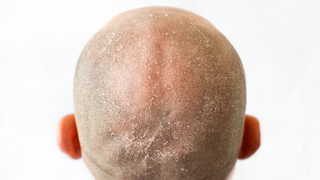
You can get dandruff on a bald head because dandruff affects the skin of the scalp, rather than the hair. Shaving or losing your hair does not necessarily remove the processes responsible for flaking.
Anti-dandruff and medicated scalp shampoos can still be relevant when there is little or no hair: the treatment needs to contact the scalp. However, dryness, shaving irritation, seborrhoeic dermatitis and psoriasis can also cause flakes or scale. The right approach depends on the cause.
Why can you get dandruff without hair?
It is understandable to associate dandruff with hair, particularly when it is usually described through flakes caught in the hair or falling onto clothing. But the flakes come from scalp skin.
Dandruff is associated with Malassezia, a yeast that naturally lives on human skin. A response to this yeast is thought to contribute to symptoms in some people. Hair itself is not required for scalp skin to flake.
Removing the hair therefore does not necessarily address the underlying scalp condition. This does not mean that baldness causes dandruff. Dandruff can affect the scalp whether someone has a full head of hair, closely shaved hair or no hair.

For a fuller explanation, see What Is Dandruff? Causes, Symptoms and How to Manage It.
Why might flakes look more noticeable after shaving?
With less hair covering the scalp, flakes and changes in the skin may simply be easier to see. You may notice areas of scaling that were previously hidden.
Greater visibility does not necessarily mean the condition has become worse. Equally, new soreness, redness or flaking after shaving should not automatically be dismissed as existing dandruff becoming more obvious. Shaving may also introduce irritation.
Does shaving your head get rid of dandruff?
Removing the hair does not necessarily treat the condition causing the flakes. Shaving may make the scalp easier to inspect, wash and apply treatment to, but it should not be viewed as a cure for dandruff.
Shaving can also leave the skin irritated or sensitive. This may create redness, soreness or visible flaking that someone interprets as dandruff.
The timing can provide useful context:
- Were flakes present before shaving?
- Did soreness or redness appear afterwards?
- Was a new shaving product, cleanser or moisturiser introduced?
- Are symptoms recurring even when you have not recently shaved?
These observations can help a pharmacist or GP understand what has changed. They cannot confirm the cause on their own.
Is it definitely dandruff?
Flaking is a symptom, not a diagnosis.
An exposed scalp makes skin changes easier to see, but appearance alone is not enough to reliably distinguish every scalp condition. Flake colour should not be treated as a diagnostic test.
Several possible explanations deserve consideration.
Dandruff
Dandruff typically involves recurring flakes and sometimes mild itching, with relatively little obvious inflammation.
Significant soreness, pronounced inflammation or persistent thick scaling should not automatically be attributed to ordinary dandruff.
The broader condition overview is covered in What Is Dandruff? Causes, Symptoms and How to Manage It.
Dry scalp
Dry skin can flake and may feel tight or uncomfortable. This is not automatically the same as dandruff, even though the symptoms can overlap.
Moisturising care may have a role where dryness is contributing, but it may not address a condition that needs a different treatment approach.
Read What Causes Dry Scalp? for more on dryness and other explanations for a flaky scalp.
Seborrhoeic dermatitis
Dandruff is often considered a milder form of seborrhoeic dermatitis. However, the terms should not be treated as completely interchangeable.
Seborrhoeic dermatitis can involve more noticeable inflammation, itching and scaling. It may also affect other areas, such as the eyebrows, around the nose or behind the ears.
More pronounced or persistent symptoms may need assessment and a management plan suited to the condition. See Seborrhoeic Dermatitis of the Scalp: Symptoms, Causes & Treatment.
Scalp psoriasis
Psoriasis can produce thicker scale and clearly defined areas of affected skin, known as plaques. It may also cause itching or soreness.
These features are useful reasons to seek advice, but they do not allow someone to diagnose psoriasis by looking at their scalp. Its management may differ from that of uncomplicated dandruff.
Scalp Psoriasis vs Dandruff explains the overlap and differences. What Does Scalp Psoriasis Look Like? provides further context without replacing professional assessment.
Shaving or product irritation
Symptoms that begin after shaving or using a new scalp product may involve irritation. Relevant products can include shaving preparations, moisturisers, cleansers and sunscreens.
Timing is useful information, but it does not prove that a product has caused contact dermatitis or an allergic reaction.
If symptoms develop after a change in your routine, note what you used and when the symptoms appeared. A pharmacist or GP can help assess whether the product or another scalp problem may be contributing.
How should you treat dandruff on a bald head?
Start with the underlying problem. Having no hair changes how easily you can reach the skin; it does not make every flaky scalp suitable for the same treatment.
1. Cleanse the scalp regularly and gently
An exposed scalp still needs cleansing. Use a gentle approach rather than trying to scrub away every visible flake.
Avoid aggressive rubbing, scraping or picking at scale. The aim is to care for the skin, rather than force flakes off it.
There is no single washing frequency that suits everyone. Your routine should take account of how your scalp responds and the instructions for any treatment you use.
If cleansing repeatedly leaves the skin tight, sore or increasingly irritated, review the products and routine with a pharmacist or GP.
2. Use an appropriate treatment where indicated
Anti-dandruff and medicated shampoos are used to treat the scalp. The word “shampoo” does not mean that hair must be present for the treatment to be relevant.
Different ingredients have different purposes. Antifungal shampoos are commonly used in dandruff and seborrhoeic dermatitis management. Coal tar preparations are another recognised option for certain scaling and itchy scalp conditions.
This does not mean that any medicated shampoo is suitable for any flakes. Treatment choice depends on the symptoms, the underlying condition and the individual product.
For a fuller explanation of the options, see Best Dandruff Treatments Explained.
3. Follow the individual product instructions
Check the label or leaflet for:
- Whether the product is suitable for your symptoms.
- How to apply it.
- How often to use it.
- The required contact time.
- Directions about treatment duration and ongoing use.
- Relevant precautions.
Do not assume that instructions for one anti-dandruff shampoo apply to another. Having little or no hair is not a reason to alter the directions independently.
If application instructions are unclear for your scalp, ask a pharmacist rather than guessing.
Where does Polytar fit?
Polytar is a licensed medicated scalp shampoo containing coal tar solution 4% w/w. Its approved uses include dandruff, scalp psoriasis, seborrhoeic dermatitis and eczema affecting the scalp.
Coal tar shampoos may help manage scaling, flaking and associated itching. They are one recognised treatment option within wider scalp-condition management.
The shampoo format does not inherently make Polytar irrelevant to someone without hair, because the treatment is intended to contact the scalp. However, it should not be assumed to be appropriate for every flaky bald scalp.
Suitability depends on what is causing the symptoms. Follow the individual product instructions and ask a pharmacist or GP if you are unsure.
4. Distinguish moisturising from treating dandruff
A dry-feeling scalp may benefit from appropriate moisturising care. However, a moisturiser and a dandruff treatment do not necessarily do the same job.
Moisturising addresses dryness. A medicated treatment is intended to manage particular scalp conditions or symptoms. Some people may need advice about both, especially when dryness and inflammation overlap.
If you are unsure what is causing the flakes, a pharmacist or GP can help you decide which approach is appropriate.
5. Manage recurrence appropriately
Dandruff can return after symptoms have improved. Recurrence does not necessarily mean that the previous treatment failed.
Ongoing management may be appropriate for some people, but it should follow the specific product instructions or professional advice. Do not assume that every medicated shampoo should be used in the same way or for the same duration.
If symptoms change, become more uncomfortable or persist despite treatment, reassessment may be more useful than repeatedly switching products.
How to Prevent Dandruff explains practical care and ongoing management for recurrent symptoms.
Caring for an exposed or closely shaved scalp
The aim is to care for the skin without adding irritation. An elaborate grooming routine is not necessary.
Avoid scraping and excessive exfoliation
Visible flakes can create an urge to remove them immediately. Avoid picking, scraping or excessive physical exfoliation, particularly when the scalp is already sore.
Thick or persistent scale is a reason to seek advice about its cause and management, rather than simply trying to remove it more forcefully.
Recognise shaving irritation
If redness or soreness appears after shaving, take that timing into account. It may be relevant to the symptoms, even if dandruff was already present.
Avoid assuming that new discomfort means you need a stronger dandruff treatment. Review your shaving and scalp-care routine with a pharmacist or GP if irritation persists.
Pay attention to scalp products
A new moisturiser, cleanser or sunscreen may be relevant if symptoms change soon after its introduction. Keeping track of what you use can help you explain the pattern during a consultation.
The aim is to use products that do not aggravate symptoms. Persistent discomfort or worsening irritation deserves advice rather than further experimentation.
Consider sun protection
Sun exposure is another consideration when the scalp is uncovered. Think about suitable protection for exposed skin, and pay attention to any sun-exposure precautions attached to a medicated treatment.
Check the individual product information or ask a pharmacist if you are unsure how those precautions apply to your routine.
When should you seek professional advice?
Speak to a pharmacist or GP if you are unsure whether the problem is dandruff, or if symptoms persist despite appropriate self-care and treatment.
Assessment is particularly useful for:
- Significant or persistent inflammation.
- Soreness or pain.
- Thick scale or clearly defined plaques.
- Bleeding, weeping or crusting.
- Possible infection.
- Symptoms that worsen or change despite treatment.
- New, unusual or rapidly changing scalp marks, lesions or other skin changes.
Do not assume that an unusual patch is dandruff because it has a flaky surface. An exposed scalp makes skin changes easier to notice, but it does not make them suitable for self-diagnosis.
Frequently asked questions
Can I use normal shampoo on a bald head?
Shampoo can cleanse scalp skin even when there is little or no hair. However, a cosmetic cleanser is not necessarily a treatment for dandruff. Persistent flaking may need a different approach or professional assessment.
Should I change the shampoo instructions because I have no hair?
Do not independently change the frequency, application method or contact time. Follow the individual product instructions and ask a pharmacist if anything is unclear.
What should I tell a pharmacist or GP?
Explain when the symptoms began, whether they followed shaving or a new product, and whether there is itching, soreness, bleeding or thick scale. Include the treatments you have tried and how you used them.
Key takeaways
- Dandruff can occur without hair because it affects scalp skin.
- Shaving may make flakes easier to see and treatment easier to apply, but it does not necessarily address the underlying condition.
- Dryness, irritation, seborrhoeic dermatitis and psoriasis can also cause flaking.
- Anti-dandruff or medicated shampoos can remain relevant on a bald scalp when appropriately chosen and used.
- Persistent, painful, inflamed or unusual changes need professional assessment.