
Quick Answer
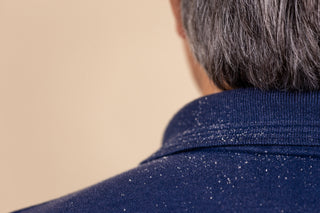
Dandruff is a common scalp condition characterised by visible white or yellow flakes, usually accompanied by mild itching and relatively little inflammation.
It is generally considered a milder form of seborrhoeic dermatitis and is strongly associated with Malassezia, a yeast that naturally lives on healthy human skin. In some people, an inflammatory response involving this yeast is believed to contribute to increased flaking and irritation.
Dandruff is usually milder than conditions such as seborrhoeic dermatitis or scalp psoriasis, but flakes alone cannot confirm what is affecting your scalp. Dry skin, eczema and several inflammatory scalp conditions can produce similar symptoms.
Management commonly includes appropriate scalp care and anti-dandruff or medicated shampoos. Different active ingredients have different purposes, so the most suitable option depends on the pattern of symptoms. Dandruff can also recur, meaning some people require repeat or ongoing management rather than a one-off treatment.
Introduction
Finding flakes in your hair or on your clothes can make dandruff seem easy to recognise.
But when the itching keeps returning, an anti-dandruff shampoo only seems to help temporarily or the scalp becomes increasingly irritated, a seemingly simple problem can quickly become confusing.
Is dandruff just dry skin? Does it mean something is wrong with your scalp? Is it caused by yeast? And if the flakes keep returning, does that mean treatment has failed?

Part of the difficulty is that flaking is a symptom, not a diagnosis. Dandruff commonly causes flakes, but so can a genuinely dry scalp, seborrhoeic dermatitis, scalp psoriasis and eczema affecting the scalp.
Understanding what dandruff actually is, and what it is not, can therefore be more useful than focusing on flakes alone.
What Is Dandruff?
Dandruff is a common scalp condition characterised by visible flaking.
Typical symptoms include:
- white or yellow flakes
- mild itching
- relatively little redness or inflammation
The flakes may be noticeable within the hair or after they have fallen from the scalp.
Dandruff is generally considered a relatively mild condition. More substantial redness, soreness, thick scale or clearly defined patches of inflamed skin may suggest that something other than straightforward dandruff is contributing to the symptoms.
This does not mean that everyone with noticeable irritation has another condition. Scalp disorders overlap considerably, which is why the complete symptom pattern matters more than any individual sign.
What Causes Dandruff?
There is an important distinction between understanding the biology associated with dandruff and assuming that every change in symptoms has a single identifiable cause.
One of the factors most strongly associated with dandruff is a naturally occurring yeast called Malassezia.
The role of Malassezia
Malassezia naturally lives on human skin.
Its presence does not mean that your scalp is dirty or that you have picked up an infection from someone else. For most people, the yeast lives on the skin without causing problems.
In some individuals, however, an inflammatory response involving Malassezia is believed to contribute to dandruff symptoms. This can lead to increased flaking and irritation.
This relationship helps explain why antifungal ingredients are commonly used in dandruff management.
It is also why describing dandruff simply as “dry skin” can be misleading. Although a genuinely dry scalp can flake, dryness and dandruff do not have the same underlying explanation.
Dandruff is more than loose flakes
It can be tempting to think of dandruff as dead skin that simply needs to be washed away.
Cleansing can remove loose flakes, but dandruff management may also need to address processes contributing to continued flaking. Depending on the symptoms, this may involve targeting Malassezia, helping manage scale or addressing associated itching.
This distinction becomes particularly important when flakes repeatedly return despite regular hair washing.
Causes and Aggravating Factors Are Not the Same Thing
When scalp symptoms change, it is easy to assume that whatever happened immediately beforehand must have “caused” the dandruff.
That is not always a safe conclusion.
Dandruff is associated with an inflammatory response involving Malassezia. Separately, the scalp can also become dry or irritated because of environmental conditions, frequent washing or hair products.
For example, cold weather, low humidity and indoor heating can contribute to scalp dryness. Washing very frequently or using products that remove too much natural oil may also contribute to temporary dryness and irritation. Haircare products can irritate sensitive skin in some people.
These factors can therefore change how a flaky or uncomfortable scalp feels without necessarily explaining the underlying dandruff itself.
A useful distinction is:
|
Underlying dandruff biology |
Factors that may affect scalp symptoms |
|
Dandruff is associated with an inflammatory response involving naturally occurring Malassezia yeast. |
Dry environmental conditions can contribute to scalp dryness. |
|
The response varies between individuals. |
Frequent washing or unsuitable products may contribute to temporary irritation or dryness. |
|
This relationship helps explain the use of antifungal dandruff treatments. |
Haircare products may irritate some sensitive scalps. |
If you notice that symptoms change after introducing a particular hair product or changing your washing routine, the timing may still be useful information. It simply does not prove that the change was the underlying cause of dandruff.
What Are the Common Symptoms of Dandruff?
The characteristic symptom is visible scalp flaking.
White or yellow flakes
Dandruff commonly produces fine white or yellow flakes.
Some may remain within the hair, while others become noticeable on clothing.
The appearance of flakes alone cannot confirm dandruff, however. Scale can occur with several scalp conditions.
Itching
Mild itching commonly accompanies dandruff.
Itching can be frustrating even when there are few visible changes to the scalp, and scratching may increase irritation.
More substantial or persistent itching can also occur with seborrhoeic dermatitis, eczema and scalp psoriasis, so its severity should be considered alongside the rest of the symptom pattern.
Mild scalp irritation
Dandruff generally involves relatively little inflammation.
If the scalp becomes very red, sore or significantly inflamed, this is less typical of straightforward dandruff and may be a reason to seek professional advice.
Is Dandruff the Same as Seborrhoeic Dermatitis?
The two conditions are closely related, but the terms should not be treated as completely interchangeable.
Dandruff is often considered a milder form of seborrhoeic dermatitis.
Both are associated with an inflammatory response involving Malassezia, and both can cause flaking and itching. However, seborrhoeic dermatitis typically involves more obvious inflammation.
Seborrhoeic dermatitis may cause:
- persistent flaking
- greasy scale
- redness
- itching
- irritation
It can also affect areas beyond the scalp, including the eyebrows, sides of the nose, ears and chest.
Dandruff, by comparison, is generally confined to the scalp and typically causes visible flakes with minimal redness or inflammation.
The boundary is not always obvious from symptoms alone. If what initially seemed like mild dandruff becomes increasingly red, irritated or persistent, professional assessment may help clarify the underlying condition.
Is It Dandruff or Something Else?
One of the most useful things to understand about dandruff is that not every flaky scalp is dandruff.
Several conditions can produce overlapping symptoms.
|
Feature |
Dandruff |
Dry Scalp |
Seborrhoeic Dermatitis |
Scalp Psoriasis |
Eczema Affecting the Scalp |
|
Flaking |
Common |
Common |
Common |
Common |
Can occur |
|
Typical scale/flakes |
Fine white or yellow flakes |
Small dry flakes |
Often greasy scale |
Often thicker scale |
Variable |
|
Itching |
Usually mild |
May be mild |
Common |
Common |
Often prominent |
|
Inflammation |
Usually minimal |
Usually little |
More noticeable |
Common |
Common |
|
Other useful clues |
Usually confined to scalp |
Scalp feels dry or tight |
May affect scalp, face, ears or chest |
Well-defined plaques may occur and scale may extend beyond hairline |
Dry, itchy, inflamed skin; appearance varies |
These differences are useful for understanding symptom patterns, but they are not a self-diagnosis tool.
Dandruff vs dry scalp
Dandruff and dry scalp are often treated as synonyms, but they are not the same.
A genuinely dry scalp lacks sufficient moisture and may feel dry, tight or itchy, with small flakes appearing as the skin sheds.
Dandruff is instead considered a mild inflammatory scalp condition associated with Malassezia.
The distinction matters because adding moisture to genuinely dry skin and treating dandruff are not necessarily the same process.
Dandruff vs scalp psoriasis
Both conditions can cause flakes and itching, but scalp psoriasis typically produces thicker scale and more noticeable inflammation.
Psoriasis may also involve clearly defined plaques and scaling that extends beyond the hairline.
Dandruff generally produces finer white or yellow flakes, limited redness and no well-defined plaques.
Neither condition should be identified from a single feature alone.
For a closer comparison, read our guide to scalp psoriasis vs dandruff.
Dandruff vs scalp eczema or dermatitis
Eczema affecting the scalp can cause dryness, itching, inflammation and sometimes scaling.
“Dermatitis” itself is a broad term meaning inflammation of the skin rather than one specific disease. Seborrhoeic dermatitis is one particular form and is closely related to dandruff.
Because different forms of dermatitis and eczema can overlap with dandruff symptoms, persistent inflammation or itching may need professional assessment.
How Is Dandruff Managed?
Dandruff management usually focuses on controlling flaking and itching and, where appropriate, addressing factors associated with the condition.
There is no single shampoo that is best for everyone.
A more useful approach is to understand what an active ingredient is intended to do and whether that matches the symptom pattern being managed.
Anti-dandruff and medicated shampoos
Cosmetic shampoos primarily cleanse the hair and scalp. This may wash away loose flakes and make them temporarily less noticeable.
Medicated shampoos contain active ingredients intended to help manage recognised scalp conditions such as dandruff.
Depending on the ingredient, they may target Malassezia, help manage scaling and itching, or loosen accumulated skin.
Common active ingredients
|
Active ingredient |
Main role in scalp care |
Why it may be used |
|
Ketoconazole |
Antifungal medicine that targets fungi and yeasts including Malassezia |
Commonly used for dandruff and seborrhoeic dermatitis where yeast is thought to contribute to symptoms |
|
Piroctone olamine |
Used in anti-dandruff formulations associated with managing Malassezia-related dandruff |
May be found in products for mild to moderate dandruff |
|
Coal tar |
Helps manage scaling, flaking, itching and excessive skin-cell turnover |
One recognised option for dandruff and other scaling inflammatory scalp conditions |
|
Salicylic acid |
Helps soften and loosen built-up scale |
May be useful where noticeable scale has accumulated |
These ingredients are not simply competing versions of the same treatment.
For example, ketoconazole primarily targets yeast, whereas salicylic acid is used to loosen built-up scale. Coal tar has a different role again, helping manage symptoms such as scaling, flaking and itching.
This is why two people who both describe themselves as having dandruff may use different types of medicated shampoo.
Where does Polytar fit?
Polytar is one licensed medicated scalp shampoo containing coal tar.
It is licensed for the treatment and management of scalp conditions including dandruff, seborrhoeic dermatitis, scalp psoriasis and eczema affecting the scalp.
Within dandruff management, coal tar shampoos may help manage visible flaking and associated itching. Polytar should therefore be understood as one recognised option within a wider range of medicated treatments rather than as the appropriate choice for every flaky scalp.
Treatment choice depends on the symptoms and underlying condition.
Practical Scalp Care When You Have Dandruff
A few principles can make dandruff management easier to understand.
Use treatments according to their instructions. Medicated shampoos differ in how they are intended to be used, so follow the product information or advice provided by a pharmacist or other healthcare professional.
Avoid switching treatments too quickly. Some medicated shampoos require consistent use before their effects become apparent. Continually changing products can make it difficult to know whether an individual approach is helping.
Pay attention to irritation. If a new shampoo or haircare product seems to coincide with burning, stinging or increased irritation, consider the timing and avoid repeatedly exposing an already irritated scalp to unnecessary product changes.
Watch for changes in the symptom pattern. Fine flakes that become thick scale, increasing redness, soreness or the appearance of plaques may warrant reassessment rather than simply trying another anti-dandruff shampoo.
Why Does My Dandruff Keep Coming Back?
Recurring dandruff is common.
For some people, flakes and itching improve during treatment and then return later. This does not automatically mean that the treatment failed.
Factors associated with dandruff, including Malassezia and an individual's response to it, may continue to influence the scalp. As a result, management can sometimes require repeat or ongoing treatment.
This is an important expectation to set.
Rather than thinking of dandruff management as “use one shampoo until the condition is permanently gone”, it can be more realistic to think in terms of controlling symptoms over time.
Consistency may be more useful than repeatedly searching for a stronger or supposedly better shampoo whenever flakes return.
When Should You Speak to a Pharmacist, GP or Dermatologist?
Mild dandruff can often be managed using appropriate over-the-counter scalp treatments.
However, professional advice may be useful when:
- symptoms persist despite appropriate treatment
- itching becomes severe or interferes with everyday life
- redness or soreness becomes more noticeable
- thick scale or clearly defined plaques develop
- symptoms spread beyond the scalp
- symptoms repeatedly return and are becoming difficult to manage
- the diagnosis is unclear
- over-the-counter products are not helping as expected.
A pharmacist can help with questions about appropriate over-the-counter dandruff treatments and how they should be used.
Where symptoms are persistent, unusual, severe or difficult to identify, assessment by a GP or dermatologist can help establish whether dandruff is the correct explanation or whether another scalp condition is contributing.
Myth vs Fact
|
Myth |
Fact |
|
Dandruff means your scalp is simply too dry. |
Dry scalp and dandruff can both cause flakes, but they have different underlying explanations. |
|
All scalp flakes are dandruff. |
Flaking can also occur with seborrhoeic dermatitis, scalp psoriasis, eczema and other scalp conditions. |
|
Dandruff means your scalp has an infection. |
Malassezia naturally lives on human skin. Dandruff is associated with an inflammatory response involving this yeast rather than simply its presence. |
|
There is one anti-dandruff shampoo that works best for everyone. |
Different active ingredients address different aspects of dandruff and related scalp conditions. |
|
If flakes return, the treatment did not work. |
Dandruff can recur. Returning symptoms do not necessarily mean that previous treatment was ineffective. |
|
Dandruff and scalp psoriasis are the same condition. |
They can both cause flaking and itching, but they have different underlying biological mechanisms and treatment pathways. |
Frequently Asked Questions
What is dandruff made of?
Dandruff is visible scale shed from the scalp. Scale refers to flakes of skin shed from the skin surface.
Dandruff typically produces fine white or yellow flakes.
Is dandruff caused by having a dry scalp?
Not necessarily.
A dry scalp and dandruff can both produce flakes, but they are different problems. A genuinely dry scalp is associated with reduced moisture, whereas dandruff is considered a mild inflammatory condition associated with an inflammatory response involving Malassezia.
Is dandruff a fungus?
Dandruff itself is not simply a fungus.
A naturally occurring yeast called Malassezia is strongly associated with dandruff. It normally lives on human skin without causing problems, but an inflammatory response involving the yeast is believed to contribute to symptoms in some people.
Is dandruff the same as seborrhoeic dermatitis?
Not exactly.
Dandruff is often considered a milder form of seborrhoeic dermatitis. Dandruff typically causes flakes and mild itching with little inflammation, whereas seborrhoeic dermatitis is more likely to cause noticeable redness, irritation and greasy scale and may affect areas outside the scalp.
Can dandruff cause an itchy scalp?
Yes. Mild itching is one of the typical symptoms of dandruff.
However, persistent or severe itching can occur with several other scalp conditions, so significant itching should not automatically be assumed to be dandruff.
Why won't my dandruff go away permanently?
Dandruff can follow a recurring pattern.
Symptoms may improve with treatment and return later. Recurrence does not necessarily mean that treatment has failed, and some people benefit from repeat or ongoing management.
Which shampoo should I use for dandruff?
There is no single shampoo that is most appropriate for everyone.
Different active ingredients have different purposes. Ketoconazole targets fungi and yeasts including Malassezia, coal tar is commonly used to help manage scaling, flaking and itching, salicylic acid helps loosen built-up scale, and piroctone olamine is included in some anti-dandruff formulations.
A pharmacist or other healthcare professional can help if you are unsure which approach is appropriate for your symptoms.
How do I know if my flakes are dandruff or psoriasis?
Flakes alone cannot reliably distinguish the conditions.
Dandruff usually involves finer white or yellow flakes, mild itching and minimal inflammation. Scalp psoriasis is more commonly associated with thicker scale, noticeable inflammation and well-defined plaques that may extend beyond the hairline.
If symptoms are persistent or difficult to identify, professional assessment is more reliable than trying to diagnose the condition from flakes alone.
Key Takeaways
- Dandruff is a common scalp condition characterised by visible white or yellow flakes, usually with mild itching and relatively little inflammation.
- It is generally considered a milder form of seborrhoeic dermatitis.
- Malassezia is a naturally occurring yeast strongly associated with dandruff, and an inflammatory response involving it is believed to contribute to symptoms in some people.
- Flaking does not automatically mean dandruff. Dry scalp, seborrhoeic dermatitis, scalp psoriasis and eczema can produce similar symptoms.
- Factors that irritate or dry the scalp should not automatically be described as the underlying cause of dandruff.
- Medicated dandruff shampoos contain different active ingredients with different roles, including ketoconazole, piroctone olamine, coal tar and salicylic acid.
- Polytar is one licensed coal tar shampoo used for dandruff and other specified scalp conditions, but it is one option within wider management pathways.
- Dandruff commonly recurs, so repeat or ongoing management may sometimes be needed.
- Persistent, severe or unusual symptoms should be professionally assessed, particularly when there is significant redness, soreness, thick scale or clearly defined plaques.