
Quick Answer
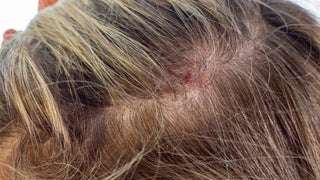
Red spots on the scalp are a symptom rather than a diagnosis. They usually indicate that the scalp has become inflamed, but inflammation can occur for many different reasons. Common causes include scalp psoriasis, seborrhoeic dermatitis, folliculitis, contact dermatitis, fungal infections and other recognised scalp conditions.
Although the spots themselves may look similar, healthcare professionals do not identify scalp conditions from colour or appearance alone. They also consider whether the spots itch, feel sore, contain scale, affect hair follicles, occur elsewhere on the body and how symptoms have changed over time.
Understanding this wider pattern of symptoms is often more helpful than focusing on the red spots themselves, because the underlying cause determines the most appropriate treatment.
Introduction
Finding red spots on your scalp can be unsettling.
Perhaps you've noticed them while washing your hair, caught sight of them in the mirror or felt small bumps while brushing your scalp. They may itch, feel sore or seem completely painless. Some disappear within days, while others keep returning despite changing shampoos or trying different home remedies.

One of the biggest frustrations is how many different explanations you can find online. A quick search may suggest anything from dandruff and allergies to psoriasis, eczema or infection. Looking at photographs often makes the confusion worse, as many scalp conditions can appear surprisingly similar.
This uncertainty is understandable.
The phrase "red spots on the scalp" describes what you can see, not what is causing it. In medicine, many different conditions can produce redness because inflammation is a feature of numerous scalp disorders.
Rather than encouraging readers to identify a condition from photographs, this guide explains the different clues healthcare professionals use when assessing scalp symptoms, what those clues may indicate and why identifying the underlying cause is the most important step before considering treatment.
Red Spots Are a Symptom, Not a Diagnosis
One of the most common misconceptions is that red spots represent a specific condition.
In reality, they do not.
A symptom is something you notice about your body, such as redness, itching or soreness. A diagnosis explains why that symptom is occurring.
This difference matters because many scalp conditions share similar symptoms.
For example, several recognised scalp conditions may all cause:
- redness
- itching
- irritation
- small bumps
- patches of inflamed skin
- tenderness
However, the biological processes behind these symptoms can be very different.
Some conditions involve an overactive immune response. Others develop because of inflammation affecting hair follicles, irritation from hair products, an inflammatory response involving naturally occurring skin yeast or, less commonly, infection.
Although these conditions may all produce visible redness, they do not behave in the same way and are not managed using identical treatments.
Thinking of red spots as a clue rather than a diagnosis can help explain why understanding the underlying cause is more useful than focusing on one visible feature.
Why Does Inflammation Create Red Spots?
Many scalp conditions that produce red spots involve inflammation, although the underlying biological processes differ from one condition to another.
During inflammation, changes within the skin, including increased blood flow and activity within local blood vessels, may make affected areas appear red on lighter skin tones. Depending on the underlying condition, inflammation may also lead to swelling, itching, tenderness, scaling or the development of bumps.
Because inflammation can arise for many different reasons, redness is only one part of understanding what is happening beneath the skin.
How Can Redness Look Different on Different Skin Tones?
Although the term "red spots" is widely used, inflammation does not appear the same on every skin tone.
On lighter skin, inflamed areas often look pink or red. On darker skin tones, they may appear darker brown, purple, grey or simply deeper in colour than the surrounding skin rather than obviously red.
This variation is one reason healthcare professionals also consider features such as itching, scaling, tenderness and the overall pattern of symptoms rather than relying on colour alone.
Why Appearance Can Sometimes Be Misleading
It is natural to assume that if two rashes look alike, they must have the same cause.
Unfortunately, the scalp rarely works that way.
Hair can hide important details, while scratching, shampoos and previous treatments may alter how the skin looks. The appearance of a condition may also change over time.
For example, a person with scalp psoriasis may initially notice only small inflamed areas before thicker scale develops. Someone with follicular inflammation may first experience tender bumps that later become pustules. Contact dermatitis may begin as widespread redness before becoming dry or flaky.

The appearance of the scalp is only one source of information. Understanding how symptoms developed, whether they have changed over time and what other features are present often provides equally important clues.
The Questions Healthcare Professionals Usually Ask
When someone presents with red spots on the scalp, colour is rarely the starting point for assessment.
Instead, healthcare professionals build a picture by asking a series of questions that help narrow the possible causes.
Do the Spots Itch?
Itching is one of the most common scalp symptoms, but the degree of itching varies considerably.
Persistent itching may occur with inflammatory scalp conditions such as scalp psoriasis or seborrhoeic dermatitis. It may also accompany contact dermatitis, fungal infections or inflammation affecting the hair follicles.
The presence of itching therefore helps describe the pattern of symptoms but does not identify the condition on its own.
Are They Painful or Tender?
Pain often suggests a different pattern of inflammation from itching alone.
Tender bumps centred around hair follicles may point towards folliculitis, while widespread soreness may occur during active inflammatory flare-ups or when scratching has damaged the skin.
Pain is therefore interpreted alongside other symptoms rather than in isolation.
Is There Scale or Flaking?
The presence of visible scale is often an important clue.
Scale develops when skin cells accumulate on the scalp surface or are shed in larger quantities than usual.
Healthcare professionals consider:
- whether the scale is thick or fine
- whether it appears dry or greasy
- whether it is widespread or confined to specific patches
- whether redness is visible beneath the scale
Scaling commonly occurs in recognised inflammatory scalp conditions such as scalp psoriasis and seborrhoeic dermatitis, although the appearance and pattern often differ.
Do the Spots Seem to Centre Around Individual Hairs?
Another useful question is whether each spot appears to develop around a hair follicle.
Hair follicles are the structures within the skin from which individual hairs grow. When these follicles become inflamed, the condition is known as folliculitis.
Folliculitis commonly produces:
- small inflamed bumps
- tenderness
- discomfort around individual hairs
- sometimes small pustules
However, not every bump centred around a hair follicle is folliculitis. Other scalp conditions can also involve the follicles, which is why this finding is interpreted alongside other symptoms rather than on its own.
Do the Spots Bleed or Form Scabs?
Bleeding usually occurs because the skin has become damaged rather than because bleeding itself is the underlying condition.
Persistent scratching may break the skin surface, while thick scale associated with inflammatory scalp conditions can crack or lift away, exposing fragile skin beneath.
Some people notice:
- small scabs
- dried blood
- crusting
- bleeding after scratching
These features help indicate how irritated the scalp has become and whether further assessment may be needed.
Are Symptoms Limited to the Scalp?
The scalp is only one part of the skin.
If similar symptoms occur elsewhere on the body, they may provide valuable clues about the underlying condition.
Healthcare professionals may ask whether similar changes affect:
- the elbows
- knees
- ears
- eyebrows
- sides of the nose
- chest
- face
- neck
- other areas of skin
For example, scalp psoriasis may occur alongside psoriasis affecting other parts of the body, while seborrhoeic dermatitis commonly affects areas rich in oil-producing glands such as the eyebrows, ears, sides of the nose and chest.
Considering symptoms beyond the scalp often helps narrow the possible causes.
Have the Symptoms Changed Over Time?
The way symptoms develop is often just as informative as how they look.
Healthcare professionals commonly ask questions such as:
- Did the spots appear suddenly or gradually?
- Have they spread?
- Do they come and go?
- Were any new hair products introduced beforehand?
- Have previous treatments helped?
- Is this the first episode or one of many?
Many inflammatory scalp conditions follow a pattern of flare-ups and periods of improvement rather than remaining unchanged.
Understanding this timeline often provides important clues about the underlying condition.
Common Causes of Red Spots on the Scalp
Several recognised scalp conditions may produce red spots or patches of inflamed skin. Although some features overlap, each condition tends to follow its own pattern of symptoms.
Scalp Psoriasis
Typical features include:
- well-defined inflamed plaques
- thick silvery-white scale
- itching
- soreness
- plaques that may extend beyond the hairline
Redness is only one aspect of the condition. The presence of characteristic plaques, scale and recurring flare-ups often provides more useful diagnostic clues.
Seborrhoeic Dermatitis
Common features include:
- red inflamed skin
- greasy white or yellow scale
- flaking
- itching
- irritation
Folliculitis
Folliculitis is inflammation of the hair follicles.
It commonly causes:
- small inflamed bumps centred around hair follicles
- tenderness
- occasional pustules
- discomfort affecting localised areas of the scalp
Because other scalp conditions may also affect the follicles, these findings are interpreted alongside the wider pattern of symptoms.
Contact Dermatitis
Contact dermatitis develops when the scalp reacts to something that comes into contact with the skin, such as certain hair dyes, shampoos or styling products.
Symptoms often include:
- redness
- irritation
- itching
- burning
- soreness
Symptoms frequently develop after exposure to a new product, although reactions do not always occur immediately.
Fungal Infections
Certain fungal infections can affect the scalp, producing inflamed, scaly patches and sometimes changes to the hair.
Because fungal infections require different management from inflammatory scalp conditions, obtaining an accurate diagnosis is important.
Other Recognised Causes
Less commonly, red scalp spots may also occur with:
- eczema affecting the scalp
- sebopsoriasis
- insect bites
- physical irritation
- other inflammatory skin conditions
The appearance alone does not determine which condition is present, which is why accompanying symptoms remain so important.
At a Glance: What Else Matters Besides the Red Spots?
|
Feature |
Why it matters |
|
Itching |
Helps describe the pattern of inflammation but is not specific to one condition. |
|
Soreness |
May suggest deeper inflammation or irritation. |
|
Scale |
Thickness, texture and distribution can help distinguish recognised inflammatory scalp conditions. |
|
Hair follicle involvement |
Bumps centred around follicles may suggest folliculitis but are not diagnostic on their own. |
|
Bleeding or scabbing |
Often reflects skin damage from scratching or significant irritation. |
|
Symptoms elsewhere |
May provide clues to conditions affecting more than the scalp. |
|
Duration |
Persistent or recurring symptoms may require assessment. |
|
Recent products |
Can help identify possible irritant or allergic reactions. |
No single feature provides the answer on its own. Instead, the combination of findings helps healthcare professionals narrow the possible causes.
How Are Red Spots on the Scalp Diagnosed?
Diagnosing the cause of red scalp spots usually begins with a discussion about your symptoms and medical history.
Healthcare professionals may ask about:
- when symptoms started
- whether they itch or hurt
- previous scalp conditions
- products used on the scalp
- whether symptoms occur elsewhere on the body
- whether the problem comes and goes
This is usually followed by an examination of the scalp and, where appropriate, other affected areas of skin.
Occasionally, additional investigations may be needed if the diagnosis remains uncertain.
Diagnosis relies on combining these pieces of information rather than any single observation. This helps explain why two people with similarly looking scalp changes may receive different diagnoses after assessment.
Why the Underlying Cause Determines Treatment
Many people understandably search for a treatment for red spots on the scalp.
However, treatment is directed at the condition causing the inflammation rather than the visible redness itself.
Different conditions require different management approaches.
For example:
- inflammatory scalp conditions may be managed using recognised treatments designed to reduce inflammation and scaling
- folliculitis may require an approach focused on inflammation affecting the hair follicles
- fungal infections require antifungal treatment
- contact dermatitis often involves identifying and avoiding the triggering substance
Using the wrong treatment may not improve symptoms because different biological processes require different approaches.
For recognised inflammatory, scaling scalp conditions such as scalp psoriasis and seborrhoeic dermatitis, treatment pathways may include medicated shampoos. Coal tar has been used in dermatology for many decades to help manage scaling, itching, inflammation and excessive skin-cell turnover. Licensed coal tar shampoos such as Polytar may form part of recognised treatment pathways where appropriate. They are not intended to treat every cause of red spots on the scalp, and treatment should always reflect the underlying diagnosis.
When Should You Seek Medical Advice?
Many cases of scalp irritation improve once the underlying cause has been identified and appropriately managed. However, because several different conditions can produce similar symptoms, persistent or worsening red spots should not simply be ignored.
Consider seeking advice from a GP, pharmacist or other healthcare professional if:
- the red spots persist despite appropriate self-care
- symptoms continue to recur
- the scalp becomes increasingly painful or swollen
- there is significant bleeding or crusting
- pus develops or the area appears infected
- large areas of the scalp become affected
- you experience noticeable hair loss or increasing hair shedding
- symptoms interfere with sleep or everyday life
- you are uncertain about the underlying cause
Prompt assessment is particularly important if symptoms develop suddenly, spread rapidly or are accompanied by fever or feeling generally unwell.
A healthcare professional can assess your symptoms, determine whether further investigation is needed and advise on recognised treatment options where appropriate.
Looking Beyond the Scalp
Although this article focuses on the scalp, some scalp conditions form part of wider skin disorders.
For example:
- Scalp psoriasis may occur alongside plaques on the elbows, knees or lower back.
- Seborrhoeic dermatitis commonly affects the eyebrows, ears, sides of the nose and chest as well as the scalp.
- Contact dermatitis may also affect nearby areas of skin that have come into contact with a triggering product.
Mentioning symptoms elsewhere on your body during a consultation can provide useful information and help healthcare professionals identify patterns that may not be obvious from the scalp alone.
Why Self-Diagnosis Can Be Difficult
It is understandable to search online after noticing a new scalp symptom.
Many people compare photographs or symptom lists hoping to identify the answer quickly.
Unfortunately, this approach has important limitations.
Different scalp conditions can produce remarkably similar appearances, while the same condition may look different from one person to another.
Factors that influence appearance include:
- skin tone
- hair density
- severity of inflammation
- scratching
- previous treatments
- how long symptoms have been present
Images can help people recognise that certain scalp conditions exist, but they cannot show symptoms such as tenderness, the severity of itching, whether symptoms recur or whether there has been recent exposure to potential triggers. These details often influence how scalp conditions are interpreted.
Myth vs Fact
|
Myth |
Fact |
|
Every red spot on the scalp means the same condition. |
Red spots are a symptom that can have many different underlying causes. |
|
You can diagnose yourself accurately by comparing online photographs. |
Photographs can help illustrate scalp conditions but cannot replace a clinical assessment. |
|
If the spots itch, they must be dandruff. |
Itching occurs in many recognised scalp conditions and is not specific to one diagnosis. |
|
All red scalp spots need the same shampoo or treatment. |
Treatment depends on the underlying diagnosis rather than the appearance of the spots alone. |
|
If symptoms improve temporarily, the problem has gone away. |
Some scalp conditions naturally fluctuate, with periods of improvement followed by recurrence. |
Frequently Asked Questions
Are red spots on the scalp always serious?
No. Many recognised scalp conditions can cause temporary or persistent red spots, and many are not serious. However, persistent, painful or worsening symptoms should be assessed so that the underlying cause can be identified.
Why do my red scalp spots itch so much?
Itching commonly occurs when the scalp is inflamed. Many different conditions—including scalp psoriasis, seborrhoeic dermatitis, folliculitis and contact dermatitis—may cause itching, which is why itch alone cannot identify the underlying cause.
Can dandruff cause red spots?
Dandruff itself usually causes visible flaking with relatively little inflammation. However, the related condition seborrhoeic dermatitis commonly causes both redness and flaking.
Could my shampoo be causing red spots?
It is possible.
Some people develop irritation or allergic contact dermatitis after using certain hair or scalp products. If symptoms begin after introducing a new product, mention this during your consultation, as it may provide an important clue to the underlying cause.
Are red bumps on the scalp always folliculitis?
No.
Folliculitis is one recognised cause of red bumps, but other scalp conditions may also produce bumps or involve the hair follicles. Whether the bumps itch, feel sore, contain pus or occur alongside scaling or other symptoms helps guide assessment.
Will changing shampoo make the spots disappear?
Not necessarily.
If the redness is caused by irritation from a hair product, changing products may help. However, inflammatory scalp diseases, fungal infections and folliculitis often require different management approaches. Understanding the underlying cause is usually more helpful than repeatedly changing shampoos.
When are medicated shampoos used?
Medicated shampoos are used for specific diagnosed scalp conditions rather than for red spots themselves.
For recognised inflammatory, scaling scalp conditions such as scalp psoriasis or seborrhoeic dermatitis, treatment pathways may include medicated shampoos containing ingredients such as coal tar. Licensed coal tar shampoos, including Polytar, are one recognised option within these treatment pathways where appropriate. They are not intended for every cause of scalp redness.
Key Takeaways
- Red spots on the scalp are a symptom rather than a diagnosis.
- Similar-looking scalp symptoms can arise from many different underlying conditions.
- Features such as itching, soreness, scaling, hair follicle involvement and how symptoms change over time often provide valuable diagnostic clues.
- Inflammation may not appear bright red on every skin tone, making colour alone an unreliable guide.
- Treatment depends on identifying the underlying cause rather than the appearance of the spots themselves.
- Persistent, painful or recurring scalp symptoms should be assessed by a healthcare professional.