
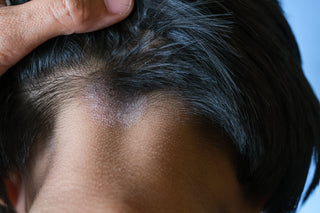
Quick Answer
Sebopsoriasis is a term that healthcare professionals often use when someone has features of both scalp psoriasis and seborrhoeic dermatitis. Rather than being considered a completely separate skin disease, it is generally understood as an overlap of characteristics from these two inflammatory scalp conditions.
People with sebopsoriasis may experience a combination of symptoms, including persistent itching, redness, inflammation and scaling. Some areas of the scalp may develop thicker, drier scale associated with psoriasis, while other areas have finer or greasier flakes that are more typical of seborrhoeic dermatitis.
Because these features overlap, diagnosis is not always straightforward. Healthcare professionals usually assess the overall pattern of symptoms, where they occur, how they have changed over time and how they respond to treatment before deciding on the most appropriate management plan.
Introduction
If you've been told you may have sebopsoriasis, you're not alone in wondering what the term actually means.
Many people search online after hearing the diagnosis, only to find conflicting explanations. Some websites describe sebopsoriasis as a separate skin condition, while others simply call it a mixture of psoriasis and dandruff.
The reality is more nuanced.
Sebopsoriasis is generally used as a practical clinical description for people whose scalp symptoms share features of both scalp psoriasis and seborrhoeic dermatitis. It helps explain why some people do not fit neatly into one recognised diagnosis, particularly when inflammation, itching and scaling have characteristics of both conditions.
Understanding what the term means - and why healthcare professionals use it - can make discussions about diagnosis and treatment much less confusing.
What Is Sebopsoriasis?
Sebopsoriasis combines features of scalp psoriasis and seborrhoeic dermatitis, two inflammatory conditions that can affect the scalp.
Sebopsoriasis is best understood as a practical clinical description used when symptoms do not fit neatly into either psoriasis or seborrhoeic dermatitis alone.
Rather than representing a completely separate disease, the term acknowledges that some people develop scalp symptoms which sit somewhere between these recognised conditions.
Although there is no single universally agreed definition used in every medical setting, clinicians generally use the term to describe overlapping clinical features such as:
- persistent scalp inflammation
- itching
- redness
- scaling
- thicker plaques associated with psoriasis
- greasier scale more typical of seborrhoeic dermatitis
Because these features overlap, treatment is usually guided by the individual's symptoms rather than the label itself.
Why Is It Called Sebopsoriasis?
The name sebopsoriasis combines the words seborrhoeic dermatitis and psoriasis.
Healthcare professionals use the term because some people develop scalp symptoms that share characteristics of both conditions. Rather than fitting neatly into one diagnosis, the pattern of symptoms sits somewhere between the two.
The term therefore acts as a practical clinical description. It communicates that both psoriasis-like and seborrhoeic dermatitis-like features are present, even though there is no universally accepted definition used in every clinical setting or research study.
Understanding the name also helps explain why treatment is usually tailored to the dominant features of the condition rather than the terminology itself.
Why Can the Two Conditions Look Similar?
One reason sebopsoriasis causes so much confusion is that scalp psoriasis and seborrhoeic dermatitis already have several symptoms in common.

Both conditions may cause:
- itching
- redness
- inflammation
- visible flaking
- scaling
- irritation
When these symptoms occur together, it can be difficult to determine which condition is responsible based on appearance alone.
For example, someone with psoriasis may develop areas that appear greasier than expected, while someone with seborrhoeic dermatitis may develop thicker scaling or more persistent inflammation than is typically seen.
This overlap means there is rarely one feature that confirms the diagnosis on its own.
Instead, healthcare professionals assess the overall pattern of symptoms, alongside a person's medical history and response to previous treatments, before deciding which diagnosis or description best fits the presentation.
What Does Sebopsoriasis Usually Look Like?
Symptoms vary from person to person, but sebopsoriasis commonly combines characteristics associated with both psoriasis and seborrhoeic dermatitis.

These may include:
- pink or red inflamed skin
- persistent itching
- white, yellow or greasy flakes
- thicker areas of scale
- plaques that are less sharply defined than those seen in classic plaque psoriasis
- involvement of the hairline
- scaling behind the ears
- recurring flaking despite regular washing
Some people experience relatively mild symptoms, while others develop more extensive inflammation affecting larger areas of the scalp.
The appearance may also change over time. During some flare-ups the scalp may resemble seborrhoeic dermatitis more closely, while at other times psoriasis-like features become more noticeable.
Because these features overlap with several scalp conditions, they should not be used to self-diagnose sebopsoriasis.
How Is Sebopsoriasis Different from Scalp Psoriasis?
Sebopsoriasis shares many characteristics with scalp psoriasis, but there are several differences that healthcare professionals may consider during assessment.
|
Feature |
Sebopsoriasis |
Scalp Psoriasis |
|
Scale |
May include greasy and thicker scale |
Usually thicker, drier silvery-white scale |
|
Plaques |
Often less clearly defined |
Usually well-defined plaques |
|
Inflammation |
Variable |
Often more pronounced beneath plaques |
|
Distribution |
Commonly affects oily areas of the scalp |
May extend beyond the hairline |
|
Body involvement |
May be confined to the scalp |
Psoriasis may also affect elbows, knees, lower back and other body sites |
These patterns are helpful guides rather than strict rules.
Some people with sebopsoriasis also have psoriasis elsewhere on the body, while others experience symptoms only on the scalp. Likewise, scalp psoriasis itself varies considerably in appearance and severity.
How Is It Different from Seborrhoeic Dermatitis?
Sebopsoriasis also shares many similarities with seborrhoeic dermatitis.
Compared with typical seborrhoeic dermatitis, sebopsoriasis may involve:
- thicker scale
- greater inflammation
- more persistent plaques
- symptoms that are slower to settle
- more obvious psoriasis-like characteristics
However, these differences are not always clear-cut.
Rather than thinking of sebopsoriasis as a completely separate condition, it is often more helpful to imagine a spectrum. Some people have symptoms that resemble seborrhoeic dermatitis more closely, while others have features that are more typical of psoriasis.
This overlap is exactly why healthcare professionals use the term sebopsoriasis.
Why Can Diagnosis Be Difficult?
There is no single test that confirms sebopsoriasis.
Instead, healthcare professionals usually make the diagnosis by assessing the overall clinical picture. This involves looking at the appearance of the scalp, discussing how symptoms have developed over time and considering whether the pattern more closely resembles psoriasis, seborrhoeic dermatitis or an overlap of both.
Several factors can make diagnosis more challenging.
Symptoms overlap considerably
Scalp psoriasis and seborrhoeic dermatitis share many visible features, including:
- itching
- redness
- inflammation
- scaling
- flaking
The severity and appearance of these symptoms can also vary from person to person, making it difficult to distinguish between the conditions based on one feature alone.
Appearance may evolve over time
Inflammatory scalp conditions often fluctuate.
During one flare-up, symptoms may resemble seborrhoeic dermatitis more closely, while at another time the same person may develop thicker plaques or more persistent scaling associated with psoriasis.
This does not necessarily mean the diagnosis has changed. Instead, it reflects that the appearance and clinical interpretation may evolve over time as symptoms develop and respond to treatment.
Previous treatment can alter the appearance
Many people have already tried over-the-counter or prescription treatments before seeing a healthcare professional.
These treatments may reduce redness or loosen scale, making the scalp appear different from an untreated flare-up.
As a result, healthcare professionals consider both the current appearance and the history of previous symptoms when making an assessment.
The whole clinical picture matters
Rather than relying on a single symptom, healthcare professionals typically consider:
- where symptoms occur
- the appearance of the scale
- whether plaques extend beyond the hairline
- whether psoriasis affects other parts of the body
- previous flare-ups
- family history where relevant
- response to previous treatments
For this reason, photographs and online symptom checklists cannot reliably diagnose sebopsoriasis. They may help explain general features, but they cannot replace an assessment of the wider clinical picture.
How Is Sebopsoriasis Diagnosed?
Diagnosis usually begins with a clinical examination of the scalp.
A healthcare professional will assess the pattern of inflammation, the type of scaling present and whether other features suggest psoriasis, seborrhoeic dermatitis or another scalp condition.
Questions may include:
- When did the symptoms begin?
- Do symptoms come and go?
- Is the itching persistent?
- Have any treatments helped previously?
- Are there symptoms elsewhere on the body?
- Is there a personal or family history of psoriasis?
Because several scalp conditions can appear similar, diagnosis sometimes becomes clearer over time as symptoms evolve or respond to treatment.
The aim is not simply to attach a label but to understand which underlying processes are contributing to the symptoms so that the most appropriate treatment plan can be chosen.
How Is Sebopsoriasis Treated?
Because sebopsoriasis is an overlap of clinical features rather than a single disease, treatment is tailored to the individual's symptoms.
Healthcare professionals consider:
- how severe the symptoms are
- how much inflammation is present
- whether psoriasis-like or seborrhoeic dermatitis-like features are more prominent
- the amount of scaling
- previous treatment responses
- whether other parts of the body are affected
For this reason, two people described as having sebopsoriasis may receive different treatment plans.
The overall goals are usually to:
- reduce inflammation
- manage itching
- control scaling
- improve comfort
- reduce the impact of flare-ups
Medicated shampoos
Medicated shampoos are commonly used when scalp symptoms are present.
The most appropriate shampoo depends on the clinical features that are causing symptoms.

Different medicated shampoos are designed to help manage different aspects of scalp disease, including inflammation, excessive scaling or yeast overgrowth associated with seborrhoeic dermatitis.
They are often used alongside other topical treatments rather than as the only treatment.
Topical corticosteroids
Topical corticosteroids are commonly prescribed when inflammation is more significant.
These medicines may help reduce:
- redness
- itching
- swelling
- inflammatory activity
Healthcare professionals will advise how long they should be used and whether they should be combined with other treatments.
Antifungal treatments
Where seborrhoeic dermatitis-like features are more prominent, antifungal shampoos or topical antifungal treatments may also be appropriate.
These commonly contain ingredients such as ketoconazole, which help reduce Malassezia yeast. Malassezia occurs naturally on healthy skin but is strongly associated with dandruff and seborrhoeic dermatitis. It is not considered a primary cause of psoriasis itself.
Whether antifungal treatment is appropriate depends on the individual's symptoms and clinical assessment.
Scale-softening treatments
For people with thicker scale, treatment may begin by helping to soften and remove accumulated skin.

Reducing heavy scale may:
- improve comfort
- reduce visible flaking
- allow topical medicines to reach the affected skin more effectively
Although scale removal can improve symptoms, it does not treat the underlying inflammatory process. Instead, it often forms one step within a broader treatment plan.
Vitamin D analogue preparations
Vitamin D analogue preparations are recognised treatments for psoriasis.
Where psoriasis-like features are dominant, they may be prescribed alone or alongside topical corticosteroids to help manage inflammation and excessive skin-cell turnover.
Suitability depends on the individual's diagnosis and overall treatment plan.
Other recognised psoriasis treatments
Some people have more extensive psoriasis affecting areas beyond the scalp.
Depending on severity, treatment may include:
- prescription topical medicines
- phototherapy (light therapy)
- systemic medicines
- biologic therapies
These treatments are generally considered when scalp symptoms form part of more widespread psoriasis rather than isolated scalp involvement.
Where Do Coal Tar Shampoos Fit?
Coal tar has been used in dermatology for many decades and remains one recognised option within scalp psoriasis management.
Coal tar shampoos may help manage:
- scaling
- flaking
- itching
- excessive skin-cell turnover associated with scalp psoriasis
They are commonly used alongside other recognised treatments where appropriate rather than replacing them.
One licensed example is Polytar Scalp Shampoo, which contains 4% coal tar solution. Within recognised scalp psoriasis treatment pathways, Polytar may be used where psoriasis-like scaling and flaking are present. It represents one licensed treatment option alongside other recognised approaches and should not be viewed as a standalone solution.
Because sebopsoriasis describes overlapping clinical features, treatment should always be based on the individual's symptoms and diagnosis. This does not mean that coal tar shampoos specifically treat sebopsoriasis or replace treatments directed towards seborrhoeic dermatitis where these are appropriate.
Living With Sebopsoriasis
For many people, the uncertainty surrounding sebopsoriasis can be just as frustrating as the symptoms themselves.
Unlike conditions with clearly defined boundaries, sebopsoriasis sits between two recognised inflammatory scalp disorders. This can make it difficult to understand exactly what is causing symptoms or why different healthcare professionals may use different terminology.
Many people describe a cycle of uncertainty.
A treatment may appear to help for several weeks or months before symptoms gradually return. At other times, changes in the scalp can make it feel as though the condition has become something different altogether.
Common experiences include:
- trying several dandruff shampoos without lasting improvement
- receiving different explanations from different healthcare professionals over time
- repeatedly searching online because neither psoriasis nor dandruff seems to describe the symptoms completely
- noticing that symptoms look different during different flare-ups
- wondering whether the diagnosis has changed
- feeling frustrated that the condition does not seem to fit neatly into one category
These experiences are understandable.
Healthcare professionals recognise that inflammatory scalp conditions do not always present in textbook ways. The term sebopsoriasis exists partly to acknowledge this overlap rather than force every person into a single diagnostic category.
Rather than focusing on the label itself, management is usually guided by the symptoms that are present at the time and how those symptoms respond to recognised treatment approaches.
Myth vs Fact
|
Myth |
Fact |
|
Sebopsoriasis is just dandruff. |
Although symptoms may overlap with dandruff, sebopsoriasis generally includes features associated with both psoriasis and seborrhoeic dermatitis. |
|
Sebopsoriasis is a completely separate skin disease. |
It is more accurately understood as a clinical description used when symptoms overlap between scalp psoriasis and seborrhoeic dermatitis. |
|
You can diagnose sebopsoriasis from photographs alone. |
Diagnosis usually requires consideration of the overall clinical picture, including symptom history, examination and response to previous treatments. |
|
Everyone with sebopsoriasis has psoriasis elsewhere on the body. |
Some people do, while others experience symptoms only on the scalp. |
|
One treatment works for everyone. |
Treatment is tailored according to the individual's symptoms, severity and whether psoriasis-like or seborrhoeic dermatitis-like features are most prominent. |
|
If treatment helps, the diagnosis must have been wrong. |
Improvement with treatment does not necessarily confirm or exclude a particular diagnosis. Several inflammatory scalp conditions may respond to similar treatments, and symptoms can evolve over time. |
Frequently Asked Questions
Is sebopsoriasis contagious?
No. Sebopsoriasis is not contagious and cannot be passed from one person to another through contact.
Can sebopsoriasis go away?
Symptoms may improve for periods of time and may become much less noticeable with appropriate management. However, inflammatory scalp conditions often follow a pattern of flare-ups and periods of improvement, so symptoms can return.
Can sebopsoriasis affect only the scalp?
Yes. For some people, symptoms are confined to the scalp. Others may also have psoriasis affecting other parts of the body, which may help healthcare professionals build a clearer overall picture.
Is sebopsoriasis the same as seborrhoeic dermatitis?
No.
Although sebopsoriasis shares many features with seborrhoeic dermatitis, it generally refers to an overlap of characteristics seen in both seborrhoeic dermatitis and psoriasis. Some people have symptoms that resemble seborrhoeic dermatitis more closely, while others have more obvious psoriasis-like features.
A healthcare professional considers the overall clinical picture when deciding which diagnosis or description best fits an individual's symptoms.
Can sebopsoriasis become psoriasis?
Sebopsoriasis is generally viewed as an overlap of clinical features rather than a separate disease that develops into psoriasis.
However, inflammatory scalp conditions can change over time. In some people, later symptoms may more clearly fit psoriasis or seborrhoeic dermatitis, allowing the diagnosis to become more definitive.
Can you have sebopsoriasis without dandruff?
Yes.
Although dandruff and seborrhoeic dermatitis are closely related, sebopsoriasis refers to overlapping features of psoriasis and seborrhoeic dermatitis rather than requiring visible dandruff itself.
Do coal tar shampoos help sebopsoriasis?
Coal tar shampoos are recognised treatment options within scalp psoriasis management and may help manage symptoms such as scaling, flaking and itching where psoriasis-like features are present.
Whether they are appropriate depends on the individual's diagnosis and treatment plan. They are generally considered one treatment option within recognised scalp psoriasis pathways rather than a universal treatment for everyone with sebopsoriasis.
Key Takeaways
- Sebopsoriasis is generally understood as an overlap of scalp psoriasis and seborrhoeic dermatitis rather than a completely separate skin disease.
- The term is used when symptoms do not fit neatly into either condition alone.
- Itching, redness, inflammation and scaling commonly occur in both conditions, making diagnosis more challenging.
- Healthcare professionals diagnose sebopsoriasis by assessing the overall clinical picture rather than relying on one symptom or test.
- Treatment is guided by the individual's symptoms and whether psoriasis-like or seborrhoeic dermatitis-like features are most prominent.
- Recognised treatment options may include medicated shampoos, topical corticosteroids, antifungal treatments, scale-softening preparations and other psoriasis treatments where appropriate.
- Coal tar shampoos, including licensed products such as Polytar, may form part of recognised scalp psoriasis treatment pathways where psoriasis-like scaling is present, but they represent one option within broader management rather than a standalone solution.