Quick Answer
For some people, exposure to sunlight may improve psoriasis symptoms because ultraviolet (UV) light can influence the immune activity involved in inflammation and unusually rapid skin-cell turnover. This is one reason medically supervised phototherapy, which uses carefully controlled UV light, forms part of recognised psoriasis treatment pathways.
However, sunlight does not affect everyone in the same way. Some people notice improvement during sunnier months, while others experience little change or find that heat, sweating or sunburn can worsen symptoms. Excessive exposure to ultraviolet radiation also increases the risk of skin damage and skin cancer.
Rather than viewing sunlight as a treatment in its own right, it is best understood as one factor that may influence psoriasis alongside recognised treatment approaches recommended by healthcare professionals.
Introduction
Many people with psoriasis notice that their symptoms seem to change with the seasons.
Some find that plaques become less noticeable during the summer months. Others report less scaling, reduced itching or longer periods between flare-ups after spending time outdoors. At the same time, many people experience worsening symptoms during winter, when daylight hours are shorter and skin receives less natural sunlight.
These experiences naturally lead to questions such as:
- Is sunlight actually good for psoriasis?
- Why does my skin seem better in summer?
- Should I spend more time in the sun?
- Is sunshine the same as phototherapy?
- Can too much sun make psoriasis worse?
The answers are more complex than many online articles suggest.
Scientists have understood for many years that ultraviolet light can affect the immune system and the way skin cells behave. This helps explain why controlled ultraviolet light is used in phototherapy, an established medical treatment for psoriasis.
However, natural sunlight is far less predictable than clinical treatment. The intensity of UV light changes according to the weather, season, latitude and time of day, and every person's skin responds differently.
Understanding this relationship can help people develop realistic expectations. While sunlight may influence symptoms for some individuals, it should be viewed as one part of a broader understanding of psoriasis rather than a standalone treatment.
Why People Often Associate Summer With Better Psoriasis
One of the most common observations among people living with psoriasis is that symptoms often seem easier to manage during the warmer months.
This can be reassuring, but it can also be confusing.
Someone who has experienced persistent plaques throughout winter may notice that redness appears less pronounced in summer. Another person may find that scales become thinner or itching feels less intense. Meanwhile, someone else may notice little difference at all.
These varying experiences reflect an important point: psoriasis behaves differently from one individual to another.
Several factors may contribute to seasonal changes, including:
- Increased exposure to natural ultraviolet light
- Changes in humidity
- More time spent outdoors
- Differences in stress levels or daily routines
- Individual biological responses
Because many of these factors change at the same time, it is often impossible to identify a single explanation for seasonal improvement.
This is one reason healthcare professionals are cautious about attributing symptom changes solely to sunlight.
What Is Ultraviolet (UV) Light?
Sunlight contains different types of electromagnetic radiation, including visible light and ultraviolet (UV) radiation.
The forms of UV light most relevant to psoriasis are:
|
Type of UV Light |
General Characteristics |
Relevance to Psoriasis |
|
UVA |
Penetrates deeper into the skin |
Used in certain forms of phototherapy, usually with additional treatments |
|
UVB |
Primarily affects the outer layers of the skin |
The form most commonly used in modern psoriasis phototherapy |
|
UVC |
Mostly absorbed by the Earth's atmosphere |
Does not normally reach the skin under natural conditions |
Although people often think of sunlight simply as "sunshine", the ultraviolet component interacts with skin in ways that are invisible but biologically important.
It is this ultraviolet radiation - not warmth itself - that is believed to influence psoriasis symptoms in some individuals.
How May UV Light Influence Psoriasis?
Psoriasis is a chronic inflammatory condition in which immune-system activity causes skin cells to reproduce more rapidly than normal. This accelerated skin-cell turnover leads to the build-up of plaques, scaling and inflammation.
Research suggests that ultraviolet light may influence several of the biological processes involved in psoriasis.
Although the precise mechanisms continue to be studied, UV exposure is understood to affect immune activity within the skin. This may reduce some of the inflammatory signals that contribute to plaque formation while also slowing the unusually rapid production of skin cells.
These effects help explain why carefully controlled ultraviolet light is used in phototherapy for some people with psoriasis.
However, this does not mean that more sunlight automatically produces greater improvement.
The relationship between UV exposure and psoriasis is not linear. Too little exposure may have little noticeable effect, while excessive exposure can damage healthy skin and increase long-term health risks.
Why Do Some People Improve While Others Do Not?
One of the biggest misconceptions about psoriasis is that sunlight works in the same way for everyone.
In reality, responses vary considerably.

Some people experience noticeable seasonal improvement, while others report little change or even worsening symptoms.
Several factors may help explain these differences.
Individual Immune Responses
Psoriasis is driven by complex immune processes that vary between individuals.
The same amount of UV exposure may influence inflammation differently depending on a person's biology, the severity of their condition and other health factors.
Differences in Skin Type
People have different skin types, pigmentation and sensitivity to ultraviolet radiation.
These differences affect how the skin responds to sunlight and how easily it burns.
The Severity and Pattern of Psoriasis
Someone with relatively localised plaques may experience different seasonal changes from someone with more widespread or persistent psoriasis.
Severity alone does not predict how someone will respond to sunlight.
Other Seasonal Changes
Summer often brings changes beyond increased sunlight.
For example:
- Spending more time outdoors
- Changes in stress levels
- Different clothing
- Altered daily routines
- Changes in humidity
These factors may all influence how symptoms feel, making it difficult to isolate the effect of sunlight alone.
Natural Sunlight vs Medical Phototherapy
Because both sunlight and phototherapy involve ultraviolet (UV) light, they are sometimes assumed to work in the same way. In reality, there are important differences.
Phototherapy is a recognised medical treatment that uses carefully controlled doses of ultraviolet light under the supervision of healthcare professionals. The type of UV light, the dose and the treatment schedule are planned to maximise potential benefits while reducing unnecessary exposure.
Natural sunlight, by contrast, is much less predictable. UV intensity varies according to the season, weather, time of day, altitude and geographical location. It is therefore not possible to control exposure with the same level of precision.
Understanding this distinction helps explain why phototherapy forms part of recognised psoriasis treatment pathways, whereas spending time in the sun is not considered an equivalent treatment.
Natural Sunlight vs Medical Phototherapy
|
Natural Sunlight |
Medical Phototherapy |
|
Exposure varies depending on weather, season and location |
Delivered using carefully controlled doses of UV light |
|
Contains a mixture of UVA, UVB and visible light |
Uses specific wavelengths selected for treatment |
|
Exposure is difficult to measure accurately |
Treatment plans are individualised and monitored |
|
May improve symptoms for some people but responses vary |
Recognised treatment option for certain people with psoriasis |
|
Excessive exposure may increase the risk of sunburn and skin damage |
Delivered with measures designed to balance effectiveness and safety |
Although both involve ultraviolet light, phototherapy should not be viewed as simply "getting more sun". It is a structured medical treatment designed around an individual's clinical needs.
Why More Sunlight Is Not Necessarily Better
When people notice that psoriasis improves during the summer, it can be tempting to assume that spending even more time in the sun will lead to greater improvement.
Current understanding does not support this idea.
Ultraviolet light may influence psoriasis in some people, but it also causes cumulative damage to healthy skin. Once exposure exceeds what the skin can tolerate, the potential harms begin to outweigh any possible benefits.
Excessive UV exposure may lead to:
- Sunburn
- Premature skin ageing
- Pigment changes
- Damage to skin cells
- An increased risk of certain types of skin cancer over time
Sunburn is particularly important because damaged skin may itself become inflamed. For some people with psoriasis, skin injury can contribute to the development of new plaques in affected areas.
For this reason, deliberately seeking prolonged sun exposure is not generally regarded as an appropriate way to manage psoriasis.
Can Sunlight Ever Make Psoriasis Worse?
Although many discussions focus on the potential benefits of sunlight, it is equally important to recognise that not everyone experiences improvement.
Some people notice that symptoms become more uncomfortable during hot weather.
Possible reasons include:
- Sunburn causing skin damage
- Heat increasing discomfort
- Sweating irritating affected skin
- Dehydration contributing to skin dryness
- Individual differences in skin sensitivity
These experiences reinforce the fact that psoriasis is highly individual.
A seasonal improvement reported by one person should not be assumed to occur in everyone.
Situations Where Sunlight May Not Be Appropriate
There are circumstances in which additional UV exposure may require particular caution.
Examples include people who:
- Burn easily in sunlight
- Have a personal history of skin cancer
- Have been advised by a healthcare professional to limit UV exposure
- Are taking medicines that increase sensitivity to sunlight
- Have experienced significant sunburn
Treatment decisions should always take an individual's wider health into account rather than focusing solely on psoriasis symptoms.
How Does Sunlight Fit Within Psoriasis Treatment Pathways?
One reason this topic causes confusion is that people often view sunlight as either a treatment or something to avoid altogether.
The reality is more balanced.
For some individuals, natural sunlight may influence symptoms. However, recognised psoriasis management is usually based on a combination of approaches chosen according to the severity of symptoms, the areas affected and an individual's response to previous treatment.

Depending on the person, management may include:
- Medicated shampoos for scalp involvement
- Topical treatments
- Coal tar preparations
- Prescription medicines
- Phototherapy
- Longer-term management plans developed with healthcare professionals
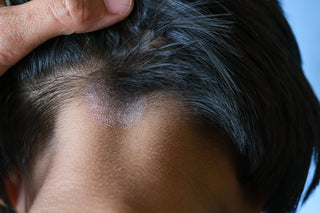
When psoriasis affects the scalp, management often focuses on reducing scaling, controlling inflammation and helping relieve itching.
Coal tar has been used in dermatology for many decades and is commonly used to help manage scaling, flaking, itching, inflammation and excessive skin-cell turnover associated with certain inflammatory scalp conditions. Polytar is one licensed coal tar shampoo used within recognised scalp psoriasis treatment pathways. Like other coal tar shampoos, it may help manage physical symptoms such as scaling, flaking and itching and should be viewed as one treatment option within broader management rather than an alternative to phototherapy or natural sunlight. This positioning is consistent with the approved treatment pathway guidance.
What Should You Realistically Expect During Different Seasons?
Many people hope that warmer weather will bring complete relief from psoriasis.
While seasonal improvement does occur for some individuals, expectations should remain realistic.
You may notice:
- Less prominent plaques
- Reduced scaling
- Longer periods between flare-ups
- No significant change
- Temporary improvement followed by recurrence
Psoriasis is characterised by periods of remission and flare-ups.
Even if symptoms improve during summer, they may return during colder months or fluctuate for reasons unrelated to the weather.
Understanding this recurring pattern can help reduce disappointment when symptoms change over time.
Myth vs Fact
|
Myth |
Fact |
|
Sunlight cures psoriasis. |
There is currently no cure for psoriasis. Some people notice symptom improvement with UV exposure, but responses vary. |
|
The more sun you get, the better your psoriasis will become. |
Excessive UV exposure increases the risk of sunburn and long-term skin damage. More is not necessarily better. |
|
Sunlight and phototherapy are the same thing. |
Phototherapy uses carefully controlled ultraviolet light under medical supervision and differs significantly from natural sunlight. |
|
Everyone with psoriasis improves during summer. |
Some people notice improvement, while others experience little change or worsening symptoms. |
|
If sunlight helps, recognised treatments are unnecessary. |
Sunlight should be viewed as one possible influence on symptoms rather than a replacement for recognised treatment pathways. |
Frequently Asked Questions
Does sunlight help scalp psoriasis?
Some people with scalp psoriasis notice improvement during sunnier months, but responses vary considerably. Recognised management may also include medicated shampoos, topical therapies and, in some cases, phototherapy.
Why does my psoriasis improve in summer?
Several factors may contribute, including increased exposure to ultraviolet light, seasonal changes and individual biological differences. It is often difficult to identify a single explanation.
Is tanning recommended for psoriasis?
Natural tanning should not be viewed as a treatment for psoriasis. Deliberate excessive UV exposure increases the risk of skin damage and differs from medically supervised phototherapy.
Is phototherapy safer than simply spending time in the sun?
Phototherapy is delivered under carefully controlled medical conditions using specific ultraviolet wavelengths and monitored treatment schedules. Natural sunlight is much less predictable.
Can sunburn trigger psoriasis problems?
Sunburn damages the skin and may worsen symptoms in some people. Protecting the skin from excessive UV exposure remains important, even if sunlight appears to improve psoriasis at other times.
Key Takeaways
- Ultraviolet (UV) light may influence the inflammation and skin-cell turnover involved in psoriasis.
- Some people notice seasonal improvement, while others experience little change or worsening symptoms.
- Natural sunlight and medically supervised phototherapy are not the same.
- More UV exposure is not necessarily better and may increase the risk of skin damage and skin cancer.
- Sunlight should be viewed as one factor that may influence symptoms rather than a standalone treatment.
- Recognised psoriasis management may include topical therapies, medicated shampoos, coal tar preparations and, where appropriate, phototherapy.
- Setting realistic expectations can help people better understand the natural pattern of flare-ups and remission associated with psoriasis.