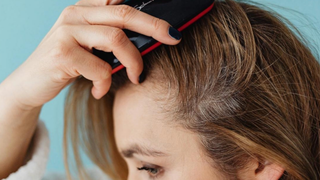
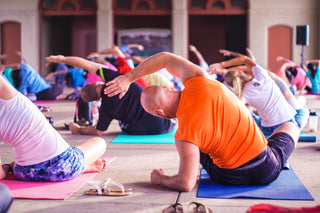
There’s nothing unusual about working up a sweat after a good workout, but for people prone to scalp problems, the effects can sometimes linger long after leaving the gym.
New research commissioned by Polytar has found that more than half (51%) of people who experience scalp issues say exercise makes them worse, equivalent to around 18 million Brits. Meanwhile, three in five (61%) experience scalp symptoms after every, most or some of their workouts.
Why does exercise affect your scalp?
Sweating is a natural part of physical activity, but it can have a noticeable effect on the scalp. More than half (53%) of exercisers say their scalp or hairline becomes sweaty during a typical workout.
For anyone already dealing with a recurring scalp condition, this can make symptoms particularly difficult to manage during the summer months.
What happens to your scalp when you sweat?
So, why can a sweaty workout sometimes leave your scalp feeling uncomfortable?
Trichologist Marta Teixeira explains:
When we exercise and sweat, a mix of perspiration, natural oils and everyday debris builds up on the scalp. In warm weather, that build-up and trapped heat can encourage Malassezia, a yeast that lives on everyone's scalp and is closely linked to dandruff and seborrhoeic dermatitis. For people prone to those conditions, that's often when flare-ups, itching and flaking appear.
This means that for people who are susceptible to conditions such as dandruff or seborrhoeic dermatitis, the combination of sweat, heat and build-up may contribute to periods of increased irritation.
Should you wash your hair straight after exercising?
If your scalp feels sweaty after a workout, you might instinctively reach for the shampoo. But concerns about washing too frequently can make deciding what to do next less straightforward.
The research found that 39% of exercisers wait over an hour, or until the following day, to wash or rinse their hair after a sweaty workout. Of these, 26% say they delay washing because they are worried about over-washing.
Rather than feeling that you need to avoid exercise or excessively wash your hair, Marta recommends focusing on how you manage your scalp following physical activity:
It’s a common misconception that you need to reduce your workouts to protect your hair, or equally, that you must aggressively over-wash it. The goal isn't avoiding sweat, but managing post-workout scalp hygiene effectively. Incorporating a targeted, medicated scalp care treatment into your routine helps clear sweat build-up and calm inflammation without stripping the scalp's protective barrier.
Are younger people more affected?
The research suggests that post-workout scalp irritation is particularly common among younger adults.
Almost three in four 18-to-24-year-olds (72%) report experiencing scalp irritation or flare-ups after working out, significantly highlighting the prevalence of the issue among this age group.
For those who exercise regularly and experience recurring scalp symptoms, maintaining a consistent approach to scalp care could therefore be particularly important.
Women report more greasiness during hot weather workouts
The research also identified a difference between male and female exercisers.
More than a third of women (37%) say exercising in hot weather makes their hair and scalp become greasier much faster, compared with 26% of men.
Women are also more likely to change their haircare habits during warmer months, with 51% increasing their washing frequency to manage discomfort.
How can you manage your scalp after a workout?
If you regularly experience dandruff, flaking or scalp irritation, paying attention to your post-workout routine may help you manage recurring symptoms.
Polytar is formulated with Coal Tar Solution 4% and provides targeted relief for persistent scalp conditions including dandruff, seborrhoeic dermatitis and scalp psoriasis. Its exfoliating action helps remove dead skin cells and scale build-up, while its anti-inflammatory and antiseptic properties help soothe irritation and support overall scalp health.
The aim isn't to stop exercising or prevent yourself from sweating. Instead, taking a consistent approach to scalp care can help ensure that workouts don't have to come at the expense of your scalp comfort.
Don’t let scalp concerns stop your workouts
Whether you're running, heading to the gym or enjoying your favourite workout class, sweaty workouts are part of the package.
But understanding how they can affect a scalp prone to irritation, and taking steps to manage sweat and build-up afterwards, can help you stay active without letting recurring scalp symptoms get in the way.
Methodology
Research commissioned by Polytar. Full methodology and raw data are available on request.
The estimate of 18 million Brits was calculated using the research finding that approximately half of adults experience dandruff or scalp flaking, multiplied by the 51% who say exercise worsens their scalp condition: 69.5 million × 50% × 51% = 17.7 million, rounded up to 18 million.