
If you’ve ever mentioned an itchy scalp, persistent dandruff, or unusual hair shedding while sitting in the barber’s chair, you’re not alone. Our new research shows that younger men are increasingly turning to barbers rather than their GP for advice about scalp and hair concerns.
With NHS waiting lists only growing and more concern around booking appointments for “minor” issues, the barbershop is emerging as the first point of call for conversations about health, particularly among younger men.
In this blog, we explore what our findings reveal about men’s health habits, why barbers are becoming more trusted and what this means for managing common scalp conditions.
Why young men are turning to their barbers
According to the British Medical Association, the NHS waiting list currently stands at 7.29 million cases, with more than six million patients waiting for treatment.
Against this backdrop, our research highlights the barriers preventing many men from seeking care:
• One in three men (34%) said difficulty booking a GP appointment put them off seeking medical help
• 29% of men didn’t think their condition was serious enough
• 28% of men said it was because of long NHS waiting times
• 19% of men said they don’t want to waste their doctor’s time
• 18% said they were too embarrassed
• 15% of men said they prefer to sort things out themselves
Despite this, over half (53%) say they trust doctors or GPs the most when it comes to early advice for minor health concerns.
However, a new authority is growing among young men.
In general, 22% of men say they feel comfortable asking their barber for health advice, but this increases dramatically to 42% among men aged 18 - 24 years old.
For some men, barbers are even their first point of call, with one in four (25%) men aged 25–34 saying they would speak to a barber first about a new hair or scalp concern. In comparison, only 5% of men aged 55-64 would go to their barber first about a new scalp or hair concern.
What men actually ask barbers about
Our Hard Water research found that three in four men (77%) said they have experienced eczema, psoriasis, dandruff, itchiness, and seborrhoeic dermatitis on their scalp.
Although often perceived as minor, these conditions can have a significant physical and emotional impact. About a third of men (34%) have asked a barber or hairdresser for advice about these scalp or hair concerns.
Again, there is a generational divide, with more than half of men (57%) aged 25-34 saying they have asked their barber about scalp or hair concerns, compared to 22% of men aged 55–64 and only 15% of men 65 or over.
Over a quarter of men (27%) say scalp problems have strongly affected their confidence and self-esteem. Despite this, 57% of men say they never or rarely speak to their barber about personal topics beyond hair.
Younger men are more likely to see barbershops as spaces for wider conversations with four in five (84%) men aged 18–24 and three in four (75%) aged 25–34 saying they talk to their barber about personal issues beyond hair, highlighting the trusted, informal nature of the setting.
Why are barbers becoming trusted voices?
Trichologist Ruth Collis explains:
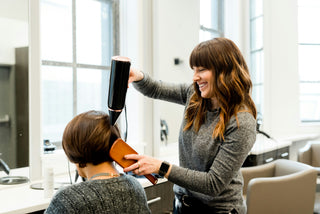
Barbers and hairdressers often build long-standing relationships with their clients, seeing them every few weeks and having open, informal conversations in a setting that feels familiar and low-pressure. Because they work directly on the scalp and hair at close range, they are frequently the first to notice visible concerns such as flaking, redness, or irritation. For many men, it can feel easier to mention something in that environment than to book a GP appointment for what they perceive to be a minor issue.
The barber’s chair offers:
• a relaxed, non-clinical environment
• regular face-to-face contact
• established trust and rapport
• an opportunity for early, informal health conversations
However, while barbers can help flag visible issues, they are not a replacement for medical advice where needed, particularly for persistent or severe symptoms.
Common scalp conditions men experience
Conditions such as dandruff, psoriasis and seborrhoeic dermatitis are often driven by inflammation and changes in normal skin cell turnover. When left unmanaged, they can worsen discomfort and affect confidence.
Polytar, formulated with 4% Coal Tar Solution, is designed to treat persistent dandruff, psoriasis, eczema, and itchy scalps by addressing the underlying process, rather than simply masking visible flakes. Used as part of a consistent haircare routine, treatments like Polytar help to to calm irritation, reduce excessive scaling, slow rapid skin cell production, and support a healthier scalp environment.
A changing landscape for men’s health conversations
Our findings show men are experiencing scalp issues, and while GPs remain highly trusted, younger men are reshaping where and how they seek early advice. For many, the barber’s chair feels more accessible, less intimidating, and easier to approach for visible concerns like scalp irritation or flaking.
Regardless of who you go to for advice, consider adding Polytar to your routine for a healthy scalp, especially if you’re struggling with scalp conditions like psoriasis, seborrhoeic dermatitis, eczema, dandruff, flaking, and itching.
Methodology
Polytar Barbers & Hairdresser Report 2026 (n=2,000 nationally representative adults).