Quick Answer
Scalp psoriasis does not usually cause permanent hair loss. However, some people experience temporary hair shedding during active flare-ups.
This shedding is often linked to inflammation, persistent scratching, irritation, thick scale build-up or disruption to the normal scalp environment rather than damage to the hair follicles themselves. In many cases, hair begins to grow back once inflammation and irritation are better controlled and the scalp has had an opportunity to recover.
Although temporary shedding can be distressing, ongoing or significant hair loss should always be assessed by a healthcare professional, as another condition may also be contributing.
Introduction
Discovering more hair than usual on your brush or in the shower can be worrying.
If you already have scalp psoriasis, it's natural to wonder whether the condition is causing permanent damage to your hair. Many people search online only to find conflicting answers. Some articles suggest psoriasis causes hair loss, while others insist it does not.
The reality is more nuanced.
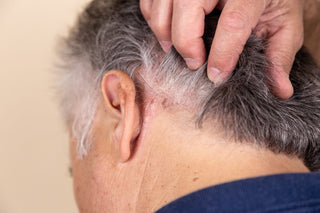
Scalp psoriasis is a chronic inflammatory skin condition that affects the scalp by causing skin cells to reproduce more rapidly than normal, leading to thick scale, inflammation, itching and plaques. While the condition itself does not usually destroy hair follicles, the inflammation and irritation associated with active scalp psoriasis can contribute to temporary hair shedding.
Understanding why this happens can help reduce unnecessary anxiety and encourage management strategies that focus on controlling the underlying scalp condition rather than the hair alone.
Why Can Hair Shedding Happen With Scalp Psoriasis?
Hair grows in cycles.
Each hair follicle naturally moves through periods of growth, rest and shedding. It is normal to lose some hair every day as part of this cycle.
When scalp psoriasis becomes active, several factors may temporarily interfere with this process.
These include:
- inflammation affecting the scalp
- persistent itching
- repeated scratching
- picking at plaques
- thick scale build-up
- irritation caused by flare-ups
Rather than the psoriasis directly causing permanent baldness, these factors may increase hair shedding or cause hairs to break more easily.
This distinction is important because, in many people, the hair follicles remain capable of producing new hair once the scalp environment improves.
The Role of Inflammation
Inflammation is one of the defining features of scalp psoriasis.

Inflammation is part of the body's immune response and contributes to redness, irritation, itching, scaling and swelling.
During an active flare-up, inflammation can make the scalp:
- sore
- tender
- itchy
- uncomfortable
Inflamed skin may also disrupt the normal environment in which hair follicles function.
Although researchers continue to study exactly how inflammation affects hair growth, it is generally understood that active inflammation can contribute to temporary shedding in some people.
Importantly, this does not usually mean the follicles have been permanently damaged.
Why Scratching and Picking Can Make Hair Loss Worse
One of the most difficult symptoms of scalp psoriasis is persistent itching.
When itching becomes intense, scratching can provide temporary relief. Unfortunately, repeated scratching may also increase irritation and contribute to temporary hair shedding.
Picking at plaques may have a similar effect.
Many people describe feeling tempted to remove thick plaques because they are uncomfortable or highly visible. However, manually picking scales can:
- increase irritation
- make the scalp sore
- cause minor bleeding
- damage the skin surface
- contribute to hair breakage
- increase temporary shedding associated with inflammation or scratching
The urge to remove plaques is understandable, but aggressive scratching or picking does not address the underlying inflammatory process that causes new scale to develop.
Can Thick Scale Affect Hair?
One of the most noticeable features of scalp psoriasis is thick scale.

Scale forms because skin cells reproduce more rapidly than normal, creating layers of accumulated skin on the scalp surface.
Heavy scale build-up can:
- increase itching
- trap shed hairs
- make washing more difficult
- contribute to discomfort
- make it harder for topical treatments to reach affected skin
People sometimes notice more hairs coming away while gently removing softened scale or washing their hair during a flare-up.
Although this can be alarming, it does not necessarily mean that the scalp is permanently losing the ability to grow hair.
Managing scale safely, rather than trying to remove it forcefully, is often an important part of recognised scalp psoriasis management pathways.
Temporary Hair Shedding vs Permanent Hair Loss
Understanding the difference between temporary shedding and permanent hair loss is one of the biggest sources of reassurance for many people.
|
Temporary Hair Shedding |
Permanent Hair Loss |
|
Often linked to inflammation, scratching or irritation |
Usually associated with other conditions or significant long-term follicle damage |
|
Hair follicles usually remain intact |
Hair follicles may become permanently damaged |
|
Often improves as scalp symptoms improve |
May continue without appropriate assessment |
|
Hair frequently regrows over time |
Regrowth may be limited depending on the underlying cause |
|
Commonly associated with active flare-ups |
Less commonly caused by scalp psoriasis alone |
For most people with scalp psoriasis, temporary shedding is much more likely than permanent hair loss.
Why Hair Often Grows Back
One of the most reassuring aspects of scalp psoriasis-related hair shedding is that regrowth is often possible.
Because the hair follicles usually remain intact, reducing the factors that contribute to shedding may allow normal hair growth to resume over time.

These factors include:
- reducing inflammation
- managing itching
- avoiding repeated scratching
- reducing irritation
- managing scale appropriately
- following recognised treatment plans
Hair growth is gradual, so improvement may not be immediate.
Just as scalp psoriasis tends to fluctuate through flare-ups and periods of improvement, hair regrowth also takes time.
What May Make Hair Shedding Worse?
Several factors may increase temporary shedding during active scalp psoriasis.
Persistent scratching
Repeated scratching can increase irritation and contribute to breakage and shedding.
Picking plaques
Removing plaques forcefully may damage the scalp surface and increase inflammation.
Ongoing inflammation
Active flare-ups may continue to disrupt the scalp environment until symptoms are better controlled.
Thick scale build-up
Heavy scaling can contribute to discomfort and make scalp care more difficult.
Frequently changing treatments
Switching products repeatedly may make it difficult to understand what is helping and may interrupt consistent management.
Delaying assessment
If hair loss is caused by another condition in addition to scalp psoriasis, delaying professional assessment may postpone appropriate treatment.
When Hair Loss May Suggest Something Else
Although temporary shedding is recognised in scalp psoriasis, not every episode of hair loss is caused by psoriasis.
Professional assessment may be appropriate if you notice:
- rapidly increasing hair loss
- clearly defined bald patches
- widespread thinning without obvious scalp inflammation
- hair loss that continues after scalp symptoms have improved
- pain, swelling or signs of infection
- uncertainty about whether another scalp condition could be present
Several other conditions can also cause hair loss, and it is possible for more than one scalp condition to occur at the same time.
A healthcare professional can help determine whether psoriasis alone explains the symptoms or whether further investigation may be needed.
How Managing the Underlying Scalp Condition May Help
When hair shedding becomes noticeable, it can be tempting to focus entirely on products that claim to support hair growth.
However, if scalp psoriasis is contributing to the problem, addressing the underlying inflammation is often a more important first step.
Scalp psoriasis management generally aims to:
- reduce inflammation
- manage itching
- reduce scaling and flaking
- improve scalp comfort
- support long-term symptom control
Because temporary shedding is often linked to active scalp symptoms, improving the scalp environment may allow normal hair growth to resume over time.
It is important to remember that improvement is not always immediate. Hair grows relatively slowly, and regrowth may continue for several months after a flare-up has settled.
Where Do Coal Tar Shampoos Fit?
One of the challenges of scalp psoriasis is managing thick scale and persistent itching.
Coal tar has been used in dermatology for many decades and is commonly used to help manage:
- scaling
- flaking
- itching
- inflammation
- excessive skin-cell turnover
Coal tar shampoos may be used when scaling is a prominent feature of scalp psoriasis because they may help soften built-up scale and reduce visible flaking, making the scalp more comfortable and helping other treatments reach affected skin more effectively.
Polytar is one example of a licensed medicated shampoo containing coal tar solution 4% w/w. It is licensed in the UK for the treatment and management of scalp psoriasis and several other inflammatory scalp conditions.
Like other coal tar shampoos, Polytar should be viewed as one recognised treatment option within broader scalp psoriasis management rather than a treatment for hair loss itself. It should not be expected to prevent hair loss or stimulate hair regrowth.
What Not to Do
When hair shedding is worrying, it is understandable to want to act quickly. However, some common responses may increase irritation or make symptoms more difficult to manage.
Avoid scratching as much as possible
Scratching may temporarily relieve itching but can also increase irritation, soreness and temporary hair shedding.
Do not pick plaques
Removing plaques forcefully may damage the scalp surface and increase discomfort. Scale management usually focuses on softening and loosening scale rather than pulling it away. This approach is consistent with recognised scalp psoriasis management.
Avoid aggressive scrubbing
Trying to scrub away thick scale can irritate already inflamed skin.
Resist changing products too frequently
When symptoms become frustrating, many people switch shampoos or treatments repeatedly.
Frequent changes can make it difficult to judge whether a treatment is helping and may interrupt a consistent management routine.
Do not ignore persistent or unusual hair loss
If hair loss becomes extensive, continues after scalp symptoms improve or appears different from previous episodes, professional assessment is advisable.
When Should You Seek Professional Advice?
Temporary shedding during an active scalp psoriasis flare-up is relatively common, but there are situations where further assessment is important.
Consider seeking medical advice if:
- hair loss is rapid or severe
- bald patches develop
- scalp symptoms become significantly worse
- you notice signs of infection, such as increasing pain, swelling or discharge
- over-the-counter treatments are not helping
- you are unsure whether psoriasis is the only cause of your symptoms
A healthcare professional can assess whether scalp psoriasis is responsible for the shedding or whether another hair or scalp condition may also be present.
Living With Hair Shedding During Scalp Psoriasis
Hair shedding can have an emotional impact that is easy to underestimate.
For many people, visible thinning creates concerns about appearance, confidence and whether the condition is becoming more serious.
It can help to remember that temporary shedding does not necessarily indicate permanent hair loss.
Many people find that as inflammation becomes better controlled and irritation reduces, shedding gradually settles and normal hair growth resumes.
Although this process can take time, understanding why it happens may help reduce some of the uncertainty that often accompanies flare-ups.
Myth vs Fact
|
Myth |
Fact |
|
Scalp psoriasis always causes permanent hair loss. |
Scalp psoriasis does not usually cause permanent hair loss. Temporary shedding is much more common. |
|
If hair is falling out, the follicles must be permanently damaged. |
In many cases, the hair follicles remain intact and hair may regrow once inflammation and irritation improve. |
|
Picking plaques helps the scalp heal faster. |
Picking plaques may increase irritation, soreness and temporary hair shedding. |
|
Coal tar shampoos regrow hair. |
Coal tar shampoos are used to help manage scaling, flaking and itching associated with inflammatory scalp conditions. They are not hair-loss treatments. |
|
More shedding always means psoriasis is getting worse. |
Hair shedding can have several causes. Persistent or unusual hair loss should be professionally assessed rather than assumed to be caused by psoriasis alone. |
Frequently Asked Questions
Does scalp psoriasis permanently damage hair follicles?
Usually not.
Most temporary shedding associated with scalp psoriasis occurs because of inflammation, scratching or irritation rather than permanent follicle damage.
Will my hair grow back after a scalp psoriasis flare-up?
For many people, yes.
If the hair follicles remain healthy, hair often regrows once inflammation and irritation have improved. Regrowth usually takes time and varies between individuals.
Why do I notice more hair when I wash my scalp?
Hair that has already entered its natural shedding phase may become trapped within thick scale and only become noticeable during washing or gentle scale removal.
Although this can seem alarming, it does not necessarily indicate permanent hair loss.
Can scratching make hair loss worse?
Yes.
Repeated scratching may increase irritation, contribute to hair breakage and increase temporary shedding associated with inflammation.
Can removing psoriasis scales stop hair loss?
Removing scale alone does not stop hair shedding or treat psoriasis.
Safe scale management may improve comfort and help other treatments reach affected skin more effectively, but managing the underlying inflammation remains an important part of treatment.
Should I use a hair-growth product?
If scalp psoriasis is active, it is important to understand why hair shedding is occurring before introducing additional products.
A healthcare professional can advise whether further assessment is needed and whether another hair-loss condition may also be contributing.
Key Takeaways
- Scalp psoriasis does not usually cause permanent hair loss.
- Temporary hair shedding may occur during active flare-ups.
- Inflammation, scratching, irritation and thick scale can all contribute to shedding.
- Hair often regrows once inflammation and irritation are better controlled.
- Avoid scratching, picking plaques and aggressive scale removal, as these may worsen irritation.
- Managing the underlying scalp condition is generally more important than focusing on the hair alone.
- Coal tar shampoos, including licensed products such as Polytar, are recognised options for managing scaling, flaking and itching but are not treatments for hair loss.
- Persistent, severe or unusual hair loss should be assessed by a healthcare professional.