
Quick Answer
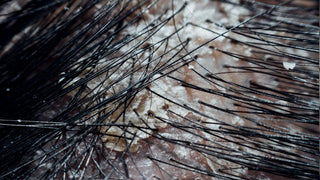
Yellow flakes on the scalp are commonly associated with dandruff and seborrhoeic dermatitis, particularly when the scale looks greasy, oily or yellowish rather than dry and powdery.

However, the colour of scalp scale does not identify the underlying condition by itself. Scale can vary in colour, thickness, texture and quantity, and conditions such as scalp psoriasis, sebopsoriasis and eczema can also cause noticeable scaling.
The most useful clues are usually what accompanies the flakes: whether the scale is greasy or thick, whether the scalp is itchy or inflamed, whether plaques are present, whether symptoms also affect the eyebrows, ears or sides of the nose, and whether the scalp is sore, crusted or damaged.
Getting rid of visible yellow flakes and treating what is causing them are also different things. Safe management generally focuses on addressing the underlying scalp condition and allowing scale to loosen rather than repeatedly scraping or picking it away.
Why Are My Scalp Flakes Yellow?
Scalp flakes are made up of scale: skin being shed from the scalp surface.
Scale does not always look the same. It can vary in:
- colour
- thickness
- quantity
- texture
- how firmly it sits on the scalp
Yellow or yellowish scale is a recognised feature of some common scalp conditions. Dandruff can produce white or yellow flakes, while seborrhoeic dermatitis is commonly associated with greasier white or yellow scale.
Seborrhoeic dermatitis affects areas rich in oil-producing glands and is strongly associated with an inflammatory response involving Malassezia, a yeast that naturally lives on human skin. These features help explain why greasy scaling and antifungal treatments are both relevant to the condition.
However, there is no useful rule that every yellow flake has formed through one specific mechanism. The appearance becomes more informative when colour is considered alongside texture, thickness, inflammation and where the symptoms occur.
What Else Matters Besides the Colour?
The appearance of scale becomes more useful when considered alongside its texture, distribution and other symptoms.
The following are examples of recognised patterns rather than fixed combinations.
|
What you notice |
What it may suggest |
|
Fine white or yellow flakes with relatively mild itching and little inflammation |
This pattern can occur with dandruff |
|
Greasy white or yellow scale with itching and inflammation |
Commonly associated with seborrhoeic dermatitis |
|
Thick, built-up scale over clearly defined plaques |
More characteristic of scalp psoriasis |
|
A mixture of greasier scale and thicker psoriasis-like scale |
May occur where features of seborrhoeic dermatitis and psoriasis overlap |
|
Itching and scaling around the scalp, eyebrows, ears or sides of the nose |
This distribution can occur with seborrhoeic dermatitis |
|
Thick scale extending beyond the hairline |
This can occur with scalp psoriasis |
|
Weeping, marked crusting or damaged skin |
These changes warrant closer attention rather than being treated as straightforward flaking |
|
Unusual hair loss or broken hairs |
This may require professional assessment because several scalp problems can affect the hair or scalp environment |
One particularly useful distinction is whether the scale is loose and flaky or forms a thicker layer attached to inflamed skin.
That can provide more context than colour alone.
Why Colour Can Look Different on Different Skin Tones
Inflammation is often described as redness, but this description does not reflect every skin tone.
On lighter skin, inflamed areas may appear pink or red.
On darker skin tones, inflammation may instead appear:
- purple
- brown
- greyish
- darker than the surrounding skin
- less obviously red
This variation can make online comparisons misleading. Photographs may help illustrate general patterns, but they cannot reliably show what is causing an individual scalp problem.
Common Causes of Yellow or Greasy Scalp Flakes
Seborrhoeic Dermatitis
Seborrhoeic dermatitis is one of the main conditions associated with greasy white or yellow scalp scale.
It is a common inflammatory skin condition affecting areas rich in oil-producing glands. On the scalp, symptoms may include flaking, greasy scale, itching, irritation and inflammation. Similar changes can also affect the eyebrows, sides of the nose, ears or chest.
The condition is strongly associated with an inflammatory response involving Malassezia, which is why antifungal shampoos commonly form part of its treatment pathway.
Dandruff
Dandruff is a common scalp condition characterised by visible flaking and is often considered a milder form of seborrhoeic dermatitis.
Typical symptoms include white or yellow flakes, mild itching and relatively little inflammation.
This means yellowish flakes do not necessarily indicate more severe inflammation. The amount of greasiness, irritation and wider distribution of symptoms can provide additional context.
Scalp Psoriasis
Scalp psoriasis is a chronic inflammatory condition in which immune activity causes skin cells to reproduce more rapidly than normal, leading to accumulated scale.
It is more commonly associated with thicker scale, clearly defined plaques, itching, inflammation and soreness. Plaques may also extend beyond the hairline.
Its appearance can overlap with other scaling conditions, so plaque formation and scale thickness are often more useful distinguishing features than colour.
Sebopsoriasis
Sebopsoriasis describes an overlap of features associated with psoriasis and seborrhoeic dermatitis.
It most commonly affects the scalp and may involve greasier scaling alongside thicker psoriasis-like scale, persistent inflammation and itching.
This overlap helps explain why some scalp presentations do not fit neatly into either a typical seborrhoeic dermatitis or psoriasis pattern.
Eczema Affecting the Scalp
Eczema can also cause scalp inflammation, itching and scaling.
Yellow scale is not a defining feature of scalp eczema, so it is more relevant where the wider pattern of symptoms suggests an inflammatory scalp problem that does not fit straightforward dandruff, seborrhoeic dermatitis or psoriasis.
Yellow Flakes vs Other Types of Scalp Scale
Visual descriptions can help readers understand broad patterns when they are not treated as strict rules.
|
Pattern |
Commonly associated features |
|
Fine white or yellow flakes |
Often seen with dandruff; itching may be mild and inflammation limited |
|
Greasy white or yellow scale |
Commonly associated with seborrhoeic dermatitis, especially with itching or inflammation |
|
Thick, well-defined scale |
More characteristic of psoriasis when it sits over clearly defined plaques |
|
Mixed greasy and thicker scale |
Can occur where psoriasis and seborrhoeic dermatitis features overlap |
|
Crusting or damaged skin |
Should be considered separately from straightforward flaking, particularly if symptoms are painful, weeping or worsening |
Descriptions such as yellow, white, greasy, thick or silvery are most useful when combined with the wider pattern of symptoms rather than treated as separate diagnoses.
How Do I Get Rid of Yellow Flakes on My Scalp?
There are two different goals to consider:
removing or reducing the scale you can see, and
managing the condition causing the scale to form.
They are not necessarily the same thing.
If scale is repeatedly removed without addressing the underlying process, it may return. This is particularly relevant with chronic or recurring inflammatory scalp conditions.
Avoid Scraping or Picking at the Scale
It can be tempting to remove noticeable flakes with your fingernails, particularly when they are firmly attached to the scalp or visible in the hair.
Forceful removal can irritate already inflamed skin.
Where scale is thick or built up, recognised management generally focuses on softening and loosening it rather than aggressively scraping, scratching or picking it away.
Reducing scale may improve comfort and can help other topical treatments reach affected skin more effectively, but removing scale does not treat the underlying inflammatory process.
Match the Treatment to the Underlying Scalp Problem
Different treatments are used for different reasons.
Antifungal shampoos may be appropriate where Malassezia is involved, while treatments for psoriasis focus on the inflammation, excessive skin-cell turnover and scale associated with that condition. Where scale is particularly thick, treatment may also include approaches designed to soften or loosen the build-up.
The most useful question is therefore not simply “How do I remove the yellow flakes?” but “What is making the scale form?”
When Do Antifungal Shampoos Help?
Antifungal shampoos are particularly relevant to dandruff and seborrhoeic dermatitis because Malassezia is strongly associated with both conditions.
Ketoconazole is one recognised antifungal medicine used in medicated shampoos. It targets fungi and yeasts, including Malassezia, and is commonly used in the management of dandruff and seborrhoeic dermatitis.
Yellow scale itself is not an indication that an antifungal shampoo is necessarily required. The treatment is relevant when the underlying scalp condition is one in which fungi or yeasts are an appropriate treatment target.
Scalp psoriasis has a different biological mechanism involving immune-driven inflammation and unusually rapid skin-cell turnover. Ketoconazole is therefore not considered a primary treatment for psoriasis itself.
What Other Treatment Approaches May Be Used?
Other recognised treatments depend on the underlying condition and the symptoms that need managing.
These may include medicated shampoos, treatments that help loosen built-up scale and anti-inflammatory or prescription treatments where appropriate.
The purpose of these approaches differs. Some target the factors contributing to dandruff or seborrhoeic dermatitis, some help control inflammation, and others make thick scale easier to manage.
This is why treatment selection is more useful when based on the scalp condition rather than the appearance of an individual flake.
Where Do Coal Tar Shampoos Fit?
Coal tar is a long-established medicinal ingredient used in certain shampoos and topical scalp treatments. It is commonly used to help manage scaling, flaking, itching and excessive skin-cell turnover in relevant scalp conditions.
Coal tar shampoos may form part of recognised treatment pathways for conditions including scalp psoriasis, seborrhoeic dermatitis and dandruff. Polytar is one licensed coal tar shampoo used within these wider treatment pathways.
Coal tar and antifungal shampoos have different roles, and the appropriate option depends on the underlying scalp problem and the symptoms being managed.
What About Oils and Home Remedies?
Oils, essential oils and other home remedies are frequently suggested online for scalp flakes, but they are not interchangeable with recognised treatments for dandruff, seborrhoeic dermatitis, psoriasis or other inflammatory scalp conditions.
Rather than adding multiple remedies to an already irritated scalp, it is more useful to focus on gentle scale management and an appropriate treatment pathway for the underlying problem.
When Should You Seek Professional Advice?
Many cases of scalp flaking are manageable, but professional assessment may be useful when symptoms become persistent, uncomfortable or difficult to control.
Consider speaking to a pharmacist, GP or other healthcare professional if:
- symptoms continue despite using an appropriate treatment as directed
- greasy or thick scale keeps returning
- inflammation, soreness or pain becomes more pronounced
- clearly defined plaques develop
- symptoms extend beyond the scalp or affect other areas significantly
- the scalp becomes substantially crusted, weeping or damaged
- there are possible signs of infection
- unusual, rapid or patchy hair loss develops
- broken hairs or clearly defined bald patches appear
- the scalp problem is becoming increasingly difficult to manage.
Professional assessment can help identify the underlying scalp condition and guide the most appropriate treatment pathway.
Myth vs Fact
|
Myth |
Fact |
|
Yellow flakes always mean seborrhoeic dermatitis. |
Greasy yellowish scale is commonly associated with seborrhoeic dermatitis, but dandruff and overlapping scalp conditions can also produce yellowish scaling. |
|
White flakes are dandruff and yellow flakes are something different. |
Dandruff can produce white or yellow flakes. Texture, greasiness and inflammation provide additional context. |
|
Yellow flakes mean there is a fungal infection. |
Malassezia is associated with dandruff and seborrhoeic dermatitis, but these conditions involve an inflammatory response to a yeast that normally lives on the skin rather than simply being an externally acquired fungal infection. |
|
You should scrape yellow scale away. |
Forceful picking or scraping can irritate the scalp. Thick scale is generally better managed by softening and loosening it. |
|
Yellow flakes mean you need an antifungal shampoo. |
Antifungal treatments are used when fungi or yeasts are relevant to the underlying condition, not simply because scale looks yellow. |
|
Yellow scale rules out psoriasis. |
Psoriasis is more commonly associated with thick white or silvery scale, but overlapping presentations such as sebopsoriasis can combine different features. |
Frequently Asked Questions
Why are my scalp flakes greasy or sticky?
Greasy white or yellow scaling is commonly associated with seborrhoeic dermatitis, which affects areas rich in oil-producing glands. Similar greasier scaling can also occur as part of sebopsoriasis.
What is the difference between yellow and white dandruff?
Dandruff can produce either white or yellow flakes. Rather than colour defining a separate type of dandruff, factors such as greasiness, inflammation and the amount of scale can provide more useful context.
How do I get rid of yellow flakes on my scalp?
Focus on both the visible scale and what is causing it. Avoid aggressive picking or scraping. Depending on the underlying condition, recognised approaches may include antifungal or other medicated shampoos, treatments designed to loosen scale and anti-inflammatory treatments.
Do antifungal shampoos help yellow scalp flakes?
They can help when dandruff or seborrhoeic dermatitis is contributing to the scaling because antifungal medicines such as ketoconazole target fungi and yeasts including Malassezia. Their relevance depends on the underlying scalp problem rather than the yellow colour itself.
When should I see a doctor about yellow scalp flakes?
Professional advice is appropriate if the scaling persists despite suitable treatment, becomes painful or markedly inflamed, involves substantial crusting or weeping, is accompanied by possible infection or unusual hair loss, or becomes increasingly difficult to manage.
Conclusion
Yellow scalp flakes can provide a useful clue, particularly when they appear greasy or occur alongside itching and inflammation. Dandruff and seborrhoeic dermatitis are therefore important explanations to consider.
The most useful interpretation comes from combining colour with texture, thickness, inflammation and distribution. Greasy scale around oil-rich areas presents a different pattern from thick scale over clearly defined plaques, while mixed features can occur with sebopsoriasis.
If scale is uncomfortable or visible, avoid repeatedly scraping or picking it away. Removing the flakes and managing the reason they keep forming are different goals, and lasting control usually depends on addressing the underlying scalp condition.
Persistent, worsening, painful, heavily crusted or otherwise unusual symptoms should be professionally assessed so that treatment can be matched to the problem responsible.
Key Takeaways
- Yellow or greasy scalp flakes are commonly associated with dandruff and seborrhoeic dermatitis.
- Colour becomes more useful when considered alongside texture, thickness, inflammation and where the symptoms occur.
- Dandruff may produce white or yellow flakes and is often considered a milder form of seborrhoeic dermatitis.
- Sebopsoriasis can combine greasier seborrhoeic dermatitis-like scale with thicker psoriasis-like scaling.
- Removing visible scale and managing the condition causing it are different goals.
- Thick or attached scale should generally be softened and loosened rather than aggressively picked or scraped away.
- Antifungal shampoos are commonly used in dandruff and seborrhoeic dermatitis management because of the role of Malassezia, rather than because the scale happens to be yellow.
- Coal tar shampoos are one recognised option within relevant scaling scalp-condition treatment pathways.
- Persistent, worsening, painful, heavily crusted or difficult-to-manage scalp symptoms should be professionally assessed.